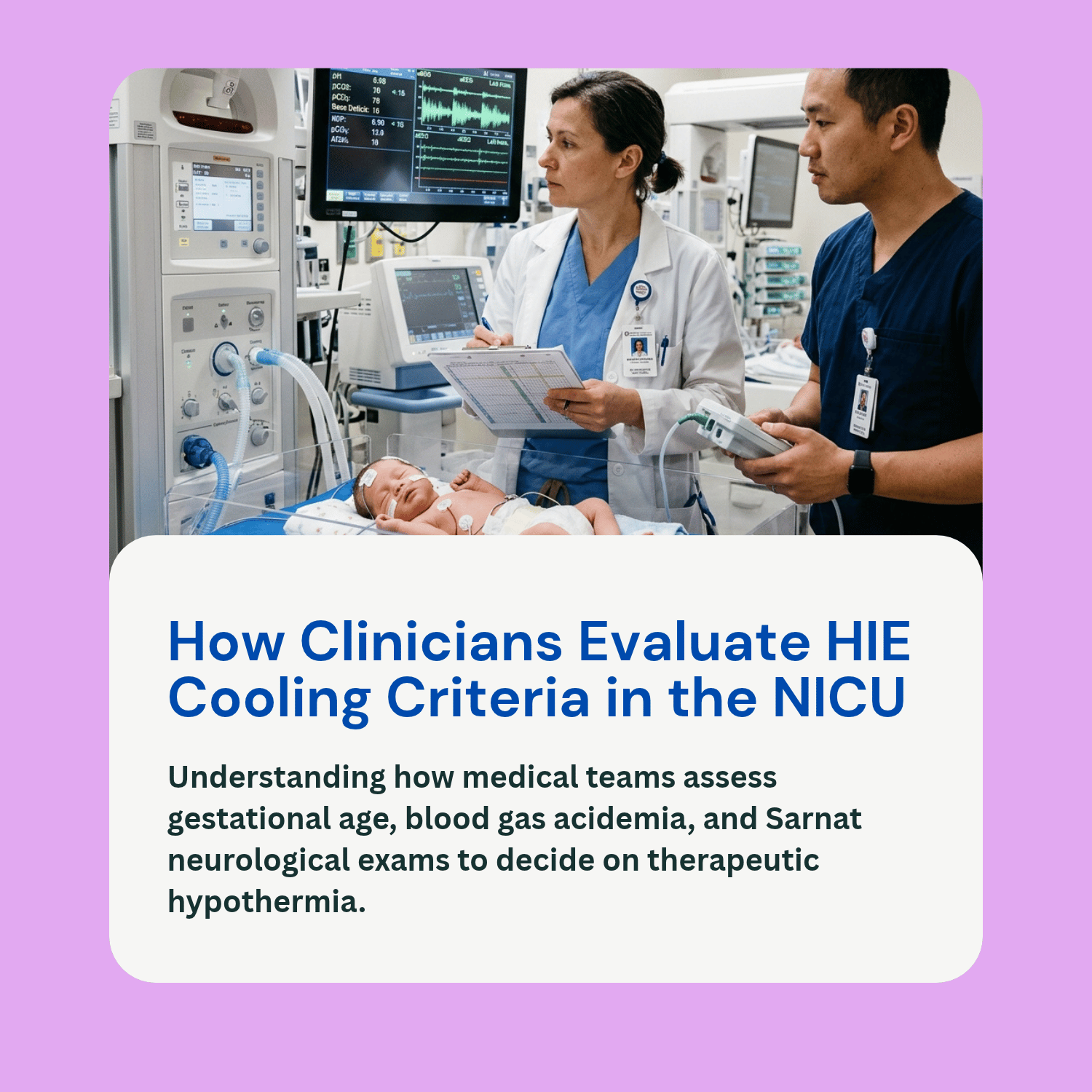

How Do Doctors Decide Whether a Newborn Qualifies for HIE Cooling Treatment?
Therapeutic hypothermia, commonly referred to as cooling therapy, is a primary medical intervention for term and late-preterm infants who experience Hypoxic-Ischemic Encephalopathy (HIE) near the time of delivery. By safely lowering a newborn’s core body temperature to approximately 33.5 degrees Celsius for a continuous 72-hour period, clinical teams can slow cerebral metabolism, suppress inflammatory cascades, and reduce the risk of long-term neurological injury.
However, therapeutic hypothermia is not a universal treatment for every baby who experiences a difficult birth. Deciding whether an infant meets established HIE cooling criteria requires a fast, structured, multi-step clinical evaluation. Care teams must systematically review gestational age, biochemical markers of oxygen deprivation, intrapartum clinical events, physical neurological signs, and potential contraindications.
Unlike general overviews of cooling therapy equipment or dedicated technical breakdowns of serial neurological examinations, this article focuses specifically on the diagnostic decision-making framework clinicians use in the first critical hours of life. Understanding these clinical criteria helps families navigate why certain tests are ordered and how specialized transport teams coordinate with tertiary neonatal intensive care units (NICUs).
The Core Eligibility Criteria: A Four-Part Clinical Framework
Professional medical societies establish strict protocol thresholds to ensure therapeutic hypothermia is offered to infants who stand to gain neuroprotective benefits while minimizing unnecessary medical risks. Under standard guidelines, a newborn must satisfy four combined categories of eligibility:
1. Gestational Age Thresholds: Therapeutic hypothermia is standardly recommended for neonates born at or after 36 weeks of gestation. Updated clinical guidance from the American Academy of Pediatrics (AAP) notes that cooling may also be considered for late-preterm infants born between 35 and 36 weeks after careful discussion of individual risks and benefits with the family. Because premature infants under 35 weeks face heightened risks of severe intracranial hemorrhage and systemic complications from hypothermia, cooling is generally not recommended in lower gestational age groups.
2. Time Window for Initiation: The optimal treatment window—often called the therapeutic window of opportunity—requires initiating cooling within 6 hours of birth. While the gold standard remains starting treatment before 6 hours, AAP clinical guidance clarifies that infants presenting between 6 and 24 hours of age may be considered for extended cooling protocols in specialized centers after direct specialist consultation and parent discussion regarding smaller potential benefits.
3. Perinatal and Biochemical Evidence of Hypoxia-Ischemia: Clinicians require objective proof of significant asphyxial stress around delivery. This must include at least one of the following criteria:
- Severe Metabolic Acidemia: An umbilical cord arterial blood gas or infant blood sample drawn within the first hour of life showing a pH of 7.00 or lower, or a base deficit of 16 mmol/L or greater. (In some regional protocols, a pH between 7.01 and 7.15 or a base deficit between 10 and 15.9 mmol/L is accepted if paired with an acute obstetric event).
- Acute Perinatal Event and Resuscitation: A history of a clear intrapartum event (such as uterine rupture, umbilical cord prolapse, or severe placental abruption) combined with a 10-minute Apgar score of 5 or less, or the continuous need for positive pressure ventilation or endotracheal resuscitation at 10 minutes of life.
4. Neurological Evidence of Encephalopathy: Biochemical markers alone do not qualify a baby for cooling; the infant must also show functional signs of central nervous system depression. Clinicians perform a structured physical exam to confirm the presence of moderate to severe encephalopathy (often using Sarnat staging criteria) or active electrographic/clinical seizures.
Evaluating Neurological Findings and Clinical Uncertainty
Assessing a newborn’s neurological state shortly after a challenging delivery is complex. Sedative medications administered to the mother during labor or emergency delivery can temporarily suppress a newborn’s responses, mimicking signs of encephalopathy. Conversely, some infants initially appear hyperalert before deteriorating into moderate encephalopathy several hours later.
To address this diagnostic uncertainty, care teams do not rely on a single momentary observation:
Standardized Physical Examinations: Clinicians evaluate six distinct neurological categories: level of consciousness, spontaneous movement, muscle tone, posture, primitive reflexes (such as suck and Moro), and autonomic function (pupil responses and respiration). An infant must typically exhibit abnormalities in three or more categories across moderate or severe columns to qualify.
Continuous Bedside Neuromonitoring: When physical signs are equivocal, NICUs utilize bedside amplitude-integrated EEG (aEEG) or formal continuous video EEG to assess background brain wave patterns. Severely discontinuous background activity, burst suppression, or electrographic seizures provide strong objective evidence supporting the decision to cool.
Specialist Consultation: Because determining eligibility can involve borderline blood gas values or subtle physical exam findings, community birthing hospitals routinely consult with regional tertiary NICU neonatologists and pediatric neurologists via phone or telemedicine. If an outborn infant meets potential criteria, transport teams initiate passive or active cooling during transport to ensure the 6-hour window is preserved.
Contraindications and Exclusionary Factors
Even when an infant displays signs of severe intrapartum stress, certain clinical conditions make therapeutic hypothermia unsafe or ineffective. Care teams routinely screen for major exclusions:
Severe Congenital or Genetic Malformations: Infants with lethal chromosomal abnormalities, severe congenital heart disease requiring immediate surgical intervention, or major structural brain malformations are generally excluded, as hypothermia does not alter the underlying genetic or structural trajectory.
Severe Intracranial Hemorrhage or Uncontrollable Bleeding: Hypothermia impairs platelet function and blood clotting pathways. If a newborn has an acute, severe intracranial hemorrhage or life-threatening systemic bleeding that cannot be stabilized with blood products, active cooling may be contraindicated.
Refractory Systemic Instability: While mild hypotension and bradycardia are expected side effects of cooling that can be managed medically, extreme circulatory collapse or severe pulmonary hypertension that fails to respond to intensive medical therapies may require pausing or withholding hypothermia.
Frequently Asked Questions (FAQ)
Why can’t doctors cool a baby with mild HIE just to be safe?
Clinical trials have demonstrated clear neuroprotective benefits of cooling for moderate and severe HIE, but evidence remains insufficient to support routine therapeutic hypothermia for mild HIE. Because cooling carries minor risks—such as low blood pressure, altered heart rhythms, and low blood platelet counts—doctors avoid using it when potential benefits do not outweigh medical risks.
What happens if a baby misses the 6-hour cooling window?
Initiating cooling within the first 6 hours provides the highest likelihood of protecting brain cells before secondary cellular energy failure occurs. However, if an infant is identified after 6 hours, specialized centers may consider initiating therapeutic hypothermia up to 24 hours after birth under specialized protocols.
Does qualifying for cooling therapy mean a baby will definitely have long-term disability?
No. Meeting the criteria for therapeutic hypothermia indicates that the newborn experienced significant intrapartum stress and signs of acute encephalopathy. Cooling therapy significantly lowers the risk of brain injury, and many cooled infants recover without long-term developmental impairments.
Is an adverse birth outcome or qualifying for cooling proof of medical negligence?
No. Meeting HIE cooling criteria means an infant experienced severe hypoxia-ischemia around delivery and required emergency neuroprotective care. Medical conditions such as sudden placental abruption, umbilical cord accidents, or maternal complications can cause acute asphyxia even under high-quality care. Determining whether standard medical protocols were followed requires a comprehensive legal and medical review of the entire labor and delivery record.