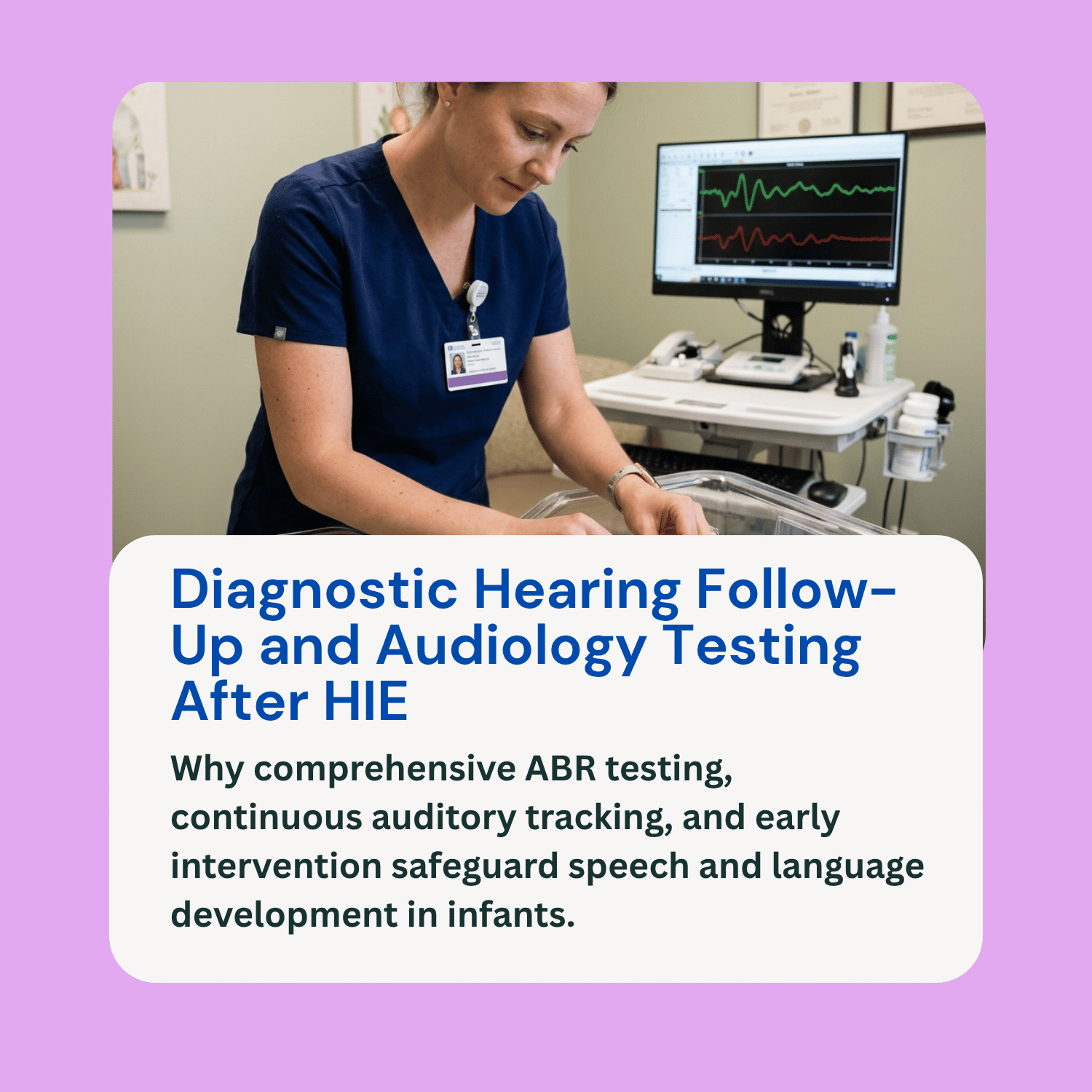

Why Is Hearing Follow-Up Important After HIE?
Hypoxic-Ischemic Encephalopathy (HIE) occurs when a newborn’s brain and delicate sensory systems experience a lack of adequate oxygen and blood flow around the time of delivery. While immediate medical management in the Neonatal Intensive Care Unit (NICU) focuses on stabilizing vital organs and protecting cerebral tissue, long-term developmental care requires tracking how sensory pathways recover. Among these systems, the auditory pathway is particularly vulnerable to oxygen deprivation and metabolic stress.
For parents preparing to transition home, understanding the necessity of dedicated hearing follow up after HIE is a vital part of comprehensive post-discharge planning. A newborn may pass an initial bedside hearing screen before leaving the hospital, yet still require ongoing audiological surveillance as they grow. The auditory nerve, inner ear hair cells, and central brainstem pathways can experience subtle or delayed changes following an hypoxic insult. Establishing structured audiology follow-up ensures that any emerging hearing variation is identified early, protecting the child’s speech, language, and social development. This guide details the distinction between screening and diagnostic testing, risk factors associated with HIE, and why ongoing audiological care is essential.
Screening vs. Diagnostic Follow-Up: Understanding the Difference
It is helpful for families to distinguish between a routine newborn hearing screening and a complete diagnostic audiological evaluation:
Newborn Hearing Screening: Conducted at the bedside prior to NICU discharge, usually via Automated Auditory Brainstem Response (AABR) or Otoacoustic Emissions (OAE). A screening is a quick pass or fail measure designed to identify infants with clear, immediate hearing deficits.
Diagnostic Audiological Evaluation: A comprehensive series of tests conducted by a licensed pediatric audiologist in a specialized sound-treated booth. Diagnostic testing measures specific frequency responses, identifies the precise location of any dysfunction (conductive, sensorineural, or auditory neuropathy spectrum), and establishes clear baseline hearing thresholds.
Because universal newborn screening is designed only as an initial filter, a passing result does not rule out the future development of delayed-onset or progressive sensorineural hearing loss. This distinction is why major health organizations, including the American Academy of Pediatrics (AAP) and the Joint Committee on Infant Hearing (JCIH), categorize HIE and neonatal cooling therapy as specific risk factors requiring formal audiological follow-up regardless of initial screening results.
Why Hypoxic-Ischemic Encephalopathy Increases Auditory Risk
The auditory system requires a continuous, high-volume supply of oxygen and glucose to maintain cell function. Several factors associated with HIE can influence auditory pathways:
Metabolic Vulnerability of the Cochlea: The delicate hair cells within the inner ear (cochlea) and the spiral ganglion neurons are highly sensitive to hypoxic and ischemic stress. Oxygen loss during labor can cause transient or permanent damage to these microstructures.
Brainstem Sensitivity: The central auditory pathway travels through the brainstem (including the cochlear nuclei and inferior colliculus) before reaching the auditory cortex. Because HIE can affect brainstem regions, signal transmission from the ear to the brain may become disrupted.
Auditory Neuropathy Spectrum Disorder (ANSD): In some infants who have experienced oxygen deprivation, the inner ear hair cells function normally, but the transmission of sound signals along the auditory nerve to the brain becomes unsynchronized. ANSD can be missed by standard screening methods that do not evaluate neural signal conduction through the brainstem.
Confounding NICU Factors: Infants treated for moderate to severe HIE often receive supportive therapies in the NICU, such as mechanical ventilation, loop diuretics, or ototoxic medications (e.g., specific antibiotics like gentamicin). Combined with oxygen deprivation, these interventions increase the need for careful hearing surveillance.
Key Referral Questions to Discuss with Your Care Team
When planning post-NICU appointments, parents can partner with their pediatrician and pediatric audiologist by bringing clear questions to their follow-up visits:
When should our baby’s first formal diagnostic Auditory Brainstem Response (ABR) test be scheduled?
Was an Automated ABR or an OAE test used for our baby’s hospital discharge screening, and what were the specific neural response findings?
Does our baby have additional risk factors, such as hyperbilirubinemia, mechanical ventilation history, or exposure to ototoxic medications, that influence the testing timeline?
What behavioral auditory milestones (such as startling to loud noises, turning toward voices, or babbling) should we watch for between formal appointments?
If an auditory delay is detected, what early intervention resources and pediatric speech-language support programs are available in our community?
A Passed Screen Does Not Replace Individualized Care
Passing an initial newborn hearing screen in the NICU is a positive milestone, but it should not be viewed as a permanent guarantee of normal hearing. Sensory pathways continue to mature throughout infancy, and delayed-onset hearing differences can emerge months after an acute hypoxic event.
Ongoing audiological monitoring provides peace of mind and ensures that if a child does develop subtle hearing variations, intervention can begin immediately. Early support during the critical early months of life preserves language acquisition and cognitive growth. Families should always rely on personalized medical guidance from their pediatric care team, pediatric audiologists, and neurodevelopmental follow-up clinics rather than relying on a single screening result.
Frequently Asked Questions (FAQ)
What is an Auditory Brainstem Response (ABR) test?
An ABR test measures how the auditory nerve and brainstem respond to sound. Small sensors are placed on the infant’s head while gentle sounds are played through soft earphones. The test is non-invasive, painless, and usually performed while the baby is asleep.
How often should a baby have hearing follow-up after HIE?
Guidelines from the Joint Committee on Infant Hearing (JCIH) recommend that infants with high-risk factors like HIE undergo formal diagnostic audiological evaluation between 3 to 6 months of age, with periodic follow-up assessments throughout early childhood as recommended by their audiologist.
Can hearing loss after HIE improve over time?
In some cases, temporary cellular dysfunction or fluid in the middle ear resolves, leading to improved hearing thresholds. In other cases, neural structural changes are permanent. Diagnostic audiology evaluations help determine whether changes are temporary or require ongoing supportive management.