
How Are Neonatal Seizures Treated and Monitored in the NICU?
When a newborn experiences a difficult birth, Hypoxic-Ischemic Encephalopathy (HIE), a stroke, or a severe metabolic imbalance, the infant brain can experience heightened electrical instability. In the Neonatal Intensive Care Unit (NICU), managing brain health requires prompt medical attention when electrical disruptions occur. Prompt, expert care is essential because neonatal seizures treatment strategies focus on stopping abnormal electrical brain activity quickly, stabilizing vital functions, and protecting developing brain tissue from further injury.
Understanding how medical teams manage and monitor neonatal seizures treatment can help ease parental anxiety during a stressful hospital stay. Unlike older children or adults, newborns rarely exhibit classic full-body convulsions. Instead, seizure activity in a newborn may be extremely subtle or entirely hidden from view. As a result, neonatologists and pediatric neurologists rely on advanced bedside monitoring tools and structured medical algorithms rather than physical observations alone. This educational guide explains how clinical teams identify underlying causes, monitor brain wave patterns, implement medical therapies, and determine long-term follow-up plans.
Identifying the Root Cause Before and During Treatment
Neonatal seizures are almost always acute symptomatic events, meaning they are triggered by an underlying systemic or neurological stressor rather than a pre-existing epilepsy syndrome. Because effective management depends on resolving the underlying trigger, NICU teams conduct rapid diagnostic evaluations alongside immediate stabilization efforts:
Hypoxic-Ischemic Encephalopathy (HIE): Oxygen deprivation and temporary blood flow reduction around the time of delivery remain the most common causes of acute brain wave disruptions in term infants. Infants receiving therapeutic hypothermia undergo continuous brain monitoring to detect and manage these events early.
Metabolic and Electrolyte Imbalances: Very low blood sugar (hypoglycemia), low calcium levels (hypocalcemia), or abnormal sodium concentrations can irritate infant brain cells. Correcting these metabolic imbalances often resolves abnormal electrical discharges without requiring long-term anti-seizure drugs.
Vascular Events and Intracranial Hemorrhage: Focal brain injury from a neonatal arterial ischemic stroke or intraventricular bleeding can cause localized electrical irritability. High-resolution brain MRI scans help clinicians pinpoint structural areas affected by vascular events.
Central Nervous System Infections: Bacterial or viral infections, such as neonatal meningitis or herpes simplex virus (HSV), can trigger inflammatory responses in the brain, requiring immediate antimicrobial or antiviral treatments alongside seizure management.
Clinical Movements vs. Electrographic Seizures: The Essential Role of EEG
One of the most critical advances in modern neonatal neurology is distinguishing between physical baby movements and true electrographic seizures:
Clinical Movements vs. True Seizures: Newborns naturally display rhythmic startles, jitteriness, and sucking motions. Jitteriness can typically be stopped by gently holding the baby’s limb, whereas a true seizure cannot be suppressed by physical touch. Conversely, up to 80% of newborn seizures after a brain insult are subclinical (electrographic-only), meaning the brain experiences seizure spikes while the baby appears completely still.
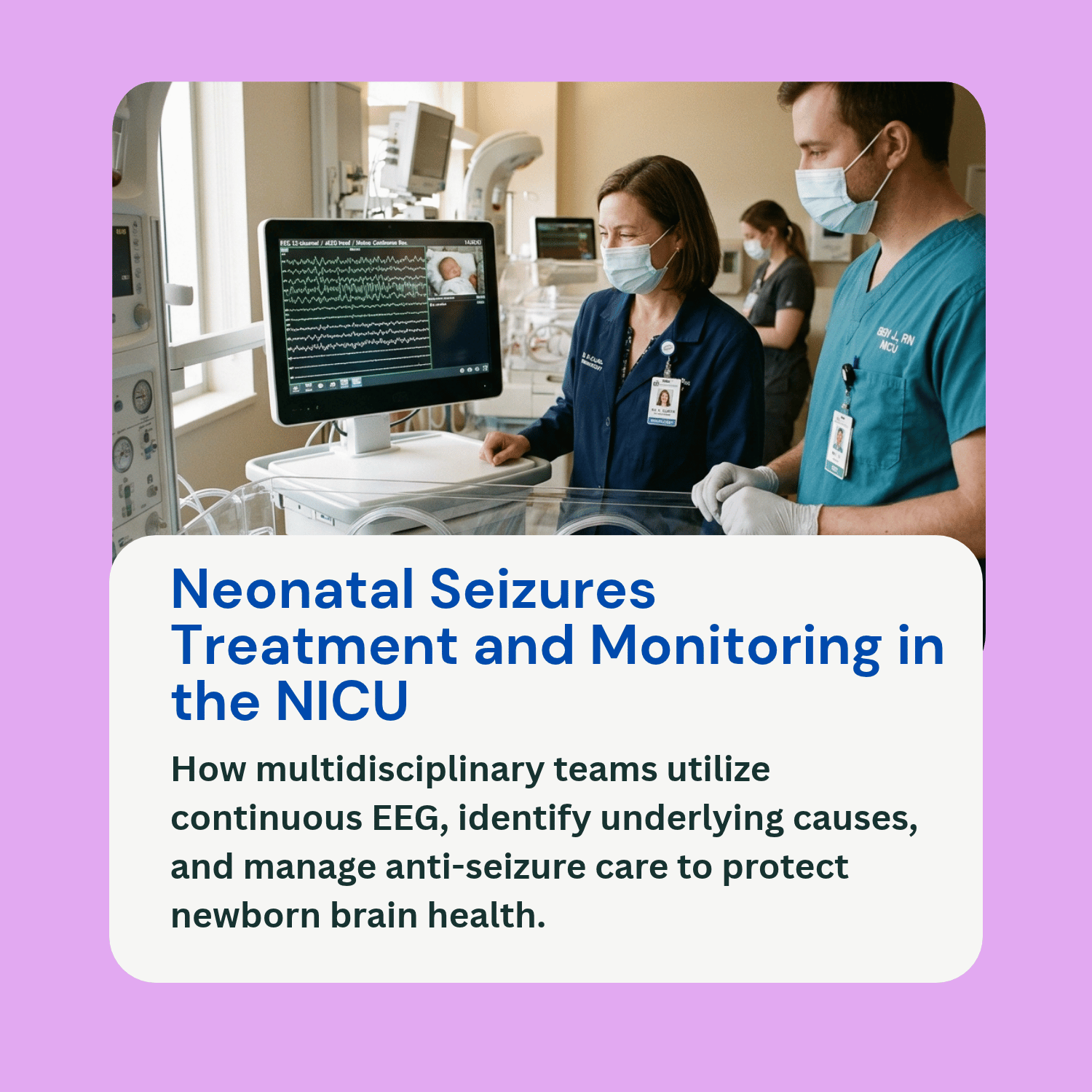
Continuous Video EEG (cEEG): Guidelines from the International League Against Epilepsy (ILAE) establish continuous multi-channel video EEG as the diagnostic gold standard. By recording full brain wave signals alongside synchronized video, neurophysiologists can definitively confirm whether unusual physical movements correspond to abnormal electrical brain activity.
Amplitude-Integrated EEG (aEEG): For continuous bedside screening, NICUs utilize amplitude integrated EEG newborn monitoring. This compressed, trended display alerts bedside nurses to sudden shifts in background brain wave patterns, prompting immediate clinical evaluation and formal cEEG confirmation.
Goals of Medical Therapy and Specialist Decision-Making
When electrographic seizure activity is confirmed or highly suspected, clinicians initiate first-line anti-seizure medications. The primary goal of medical treatment is to suppress abnormal electrical discharges, reduce overall seizure burden, and minimize oxygen consumption in brain tissue:
First-Line Pharmacotherapy: Standard international guidelines recommend first-line medications (such as intravenous phenobarbital) to stabilize neural cell membranes, regardless of whether the underlying trigger is HIE, stroke, or hemorrhage.
Second-Line Options: If initial therapy does not achieve full electrical control, neonatologists and pediatric neurologists evaluate second-line agents (such as levetiracetam, fosphenytoin, or midazolam). Choosing second-line medications requires careful consideration of the baby’s heart function, liver metabolism, and underlying medical conditions.
Specialist Supervision: Managing anti-seizure medications in a critically ill infant involves complex drug clearance variables, particularly during HIE cooling criteria treatment protocols. Pediatric neurologists closely evaluate when to adjust dosages and when to safely discontinue medications before hospital discharge once acute brain swelling resolves.
Questions Parents Can Ask the Care Team
Navigating the NICU during neurological treatment can feel overwhelming. Parents can partner with their care team by asking specific, constructive questions during medical rounds:
Has our baby’s seizure activity been confirmed on a continuous video EEG monitor?
What underlying cause (such as blood sugar levels, HIE, or infection) do the lab and imaging results indicate?
How is our baby responding to the first-line medication, and has the total seizure burden decreased on the screen?
What physical signs or subtle movements should we watch for while resting at the bedside?
What is the plan for evaluating our baby’s motor tone and developmental milestones through a high risk infant follow up clinic after discharge?
Frequently Asked Questions (FAQ)
Will my baby need to stay on anti-seizure medication forever?
Most acute symptomatic seizures in newborns resolve within a few days as the underlying brain stress or metabolic imbalance improves. Modern guidelines recommend weaning anti-seizure medications before hospital discharge whenever possible, provided the EEG remains normal and the baby is seizure-free.
Does having a seizure in the NICU mean my baby will develop epilepsy?
Not necessarily. The majority of newborn seizures are acute, temporary reactions to an underlying event rather than a permanent epilepsy condition. Long-term outcomes depend primarily on the nature and extent of the underlying brain injury rather than the temporary seizure event itself.
How do doctors know if a baby is having a silent seizure?
Silent (subclinical) seizures produce no visible physical jerking or twitching. They are identified exclusively through continuous EEG or aEEG bedside monitors that detect abnormal, repetitive electrical brain wave spikes.
Is an abnormal EEG or a seizure diagnosis proof of medical negligence?
No. Seizures are a clinical symptom of underlying brain irritability, which can stem from unpredictable birth complications, acute placental abruption, or genetic factors even under high-quality medical care. Determining whether standard medical protocols were met requires a comprehensive review of the complete obstetric and neonatal record.