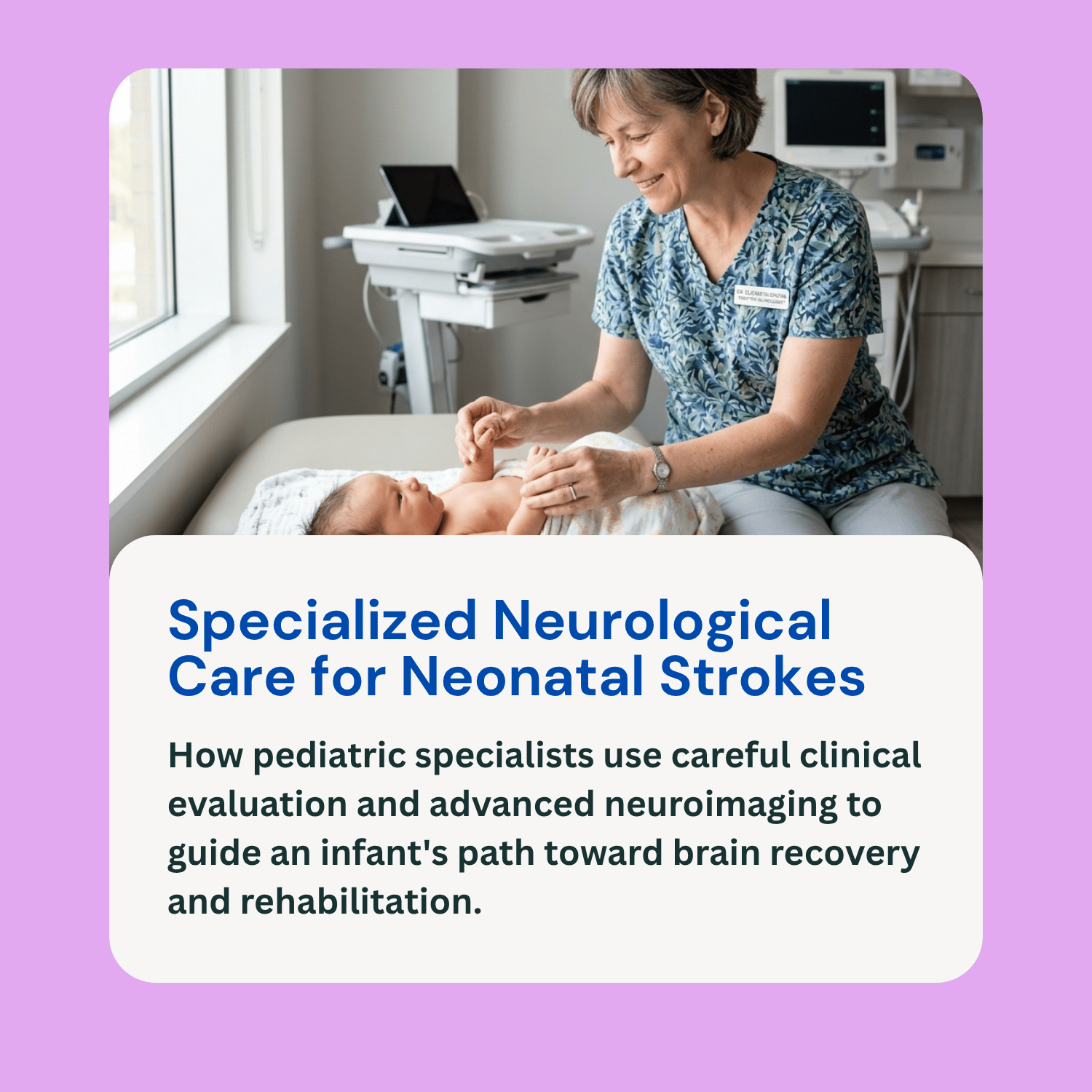

What Is Neonatal Stroke?
For most people, the word “stroke” brings to mind older adults managing cardiovascular disease. Because of this common association, learning that a newborn infant can suffer a stroke is deeply shocking to new parents. Yet, a stroke can occur during pregnancy, throughout labor and delivery, or within the first 28 days of a baby’s life outside the womb. This specific neurological event is known as a neonatal stroke.
A stroke occurs when the blood supply to a specific region of the infant’s brain is suddenly interrupted or drastically reduced, depriving fragile neural tissues of vital oxygen and nutrients. Within minutes, brain cells in the affected area begin to fail. While this diagnosis is incredibly frightening, a newborn’s brain possesses a unique, powerful capacity to adapt and heal through a process called neuroplasticity. This educational guide breaks down how these vascular events happen, the subtle symptoms to look out for, and how medical teams protect a newborn’s long-term neurological health.
The Two Types of Newborn Strokes and Their Biological Causes
Like adult strokes, a neonatal stroke is categorized into two primary types based on the underlying vascular disruption:
1. Ischemic Stroke
This is the most common form, occurring when a blood clot (thrombus) blocks an artery, cutting off blood flow to a specific area of the brain. The most frequent subtype is a neonatal arterial ischemic stroke (NAIS), which usually impacts the middle cerebral artery.
2. Hemorrhagic Stroke
This occurs when a weakened or damaged blood vessel ruptures, causing active bleeding directly into or surrounding the brain tissue.
What Triggers a Stroke in a Newborn?
The exact cause is often a combination of factors, but the primary clinical triggers include:
- Placental Complications: Blood clots can form inside the placenta and travel through the umbilical cord into the baby’s circulatory system, eventually reaching the brain.
- Birth Trauma: Intense physical pressure on the baby’s head during a prolonged, difficult delivery—or the improper use of assistive devices like vacuum extractors or forceps—can tear or compress delicate cerebral blood vessels.
- Maternal Health Factors: Preeclampsia, chorioamnionitis (uterine infection), or maternal blood-clotting disorders significantly increase the vascular risk to the fetus.
- Infant Risk Factors: Congenital heart defects, systemic blood infections (sepsis), or genetic blood disorders that cause hypercoagulability (thick blood) make an infant more prone to forming dangerous clots.
Recognizing the Subtle and Hidden Symptoms in Infants
Identifying a stroke in an adult is usually straightforward, but a newborn cannot communicate weakness or numbness. Consequently, many strokes that occur around the time of birth are “silent” and may not be formally identified until months later when the child misses developmental milestones.
When acute symptoms do manifest in the first few days of life, they frequently include:
- Neonatal Seizures: This is the single most common warning sign. These seizures are often subtle, presenting as rhythmic twitching of one arm or leg, repetitive lip-smacking, cycling leg movements (“pedaling”), or sudden, unexplained pauses in breathing (apnea).
- Extreme Lethargy: The baby is abnormally weak, completely floppy (poor muscle tone), and cannot wake up sufficiently to feed.
- Asymmetric Weakness: The baby consistently favors one side of their body, keeping one hand tightly fisted while the other moves freely.
- Difficulty Feeding: A weak, uncoordinated sucking and swallowing reflex that causes choking or poor weight gain.
Advanced Diagnostic Protocols in Pediatric Neurology
Because infant symptoms can mimic other newborn conditions, a definitive diagnosis requires specialized neuroimaging tools. If a medical team suspects a neonatal stroke, they will immediately order the following tests:
- Neonatal Cranial Ultrasound: This is often the initial bedside screening tool. Using sound waves through the baby’s fontanelle (soft spot), it can quickly detect major brain bleeding or structural shifts, though it may miss smaller ischemic clots.
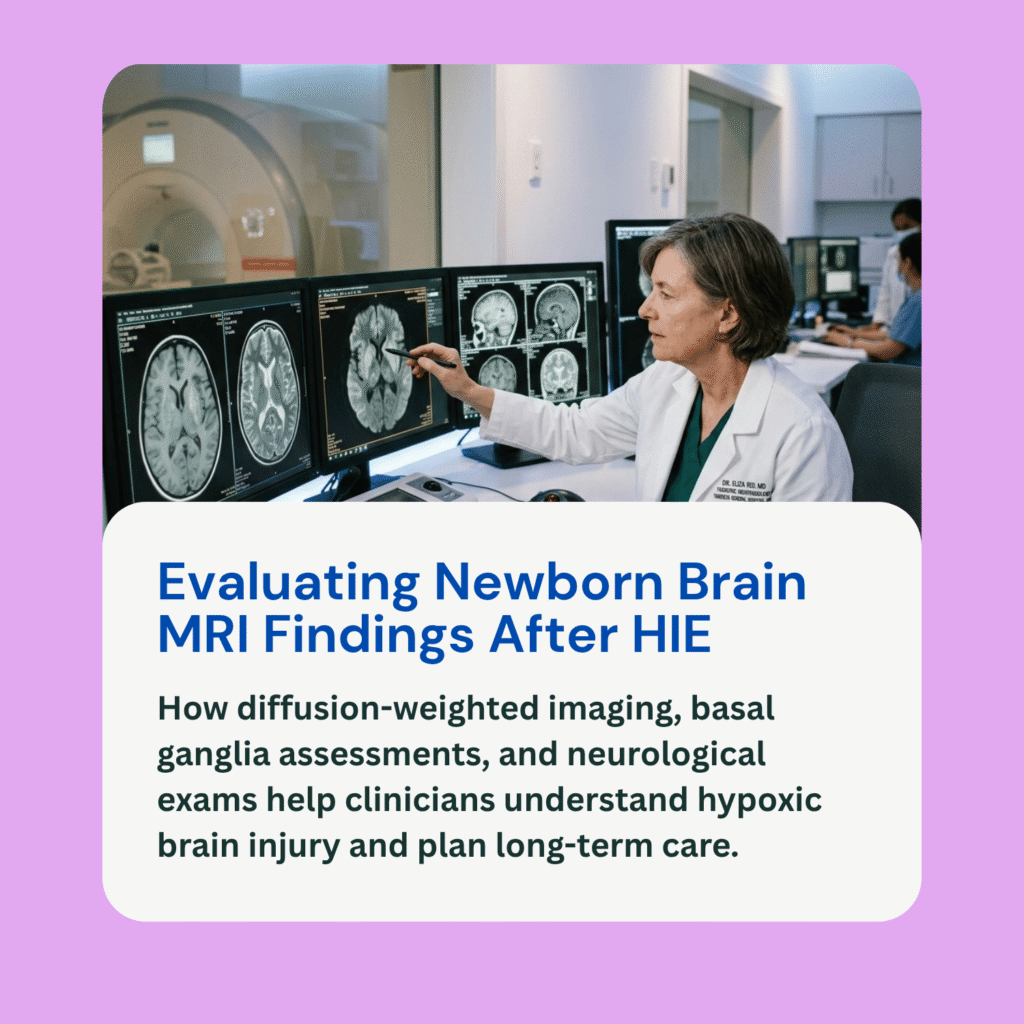
- Magnetic Resonance Imaging (MRI): This is the definitive gold standard for diagnosing a neonatal stroke. An MRI uses powerful magnets to capture highly detailed, cross-sectional pictures of the infant’s brain, mapping the exact size, location, and age of the stroke.
- Electroencephalogram (EEG): If the infant is exhibiting subtle twitching, an EEG places small sensors on the scalp to monitor the brain’s electrical activity. This tool confirms if abnormal electrical patterns are causing neonatal seizures.
Emergency Medical Treatments and Clinical Interventions
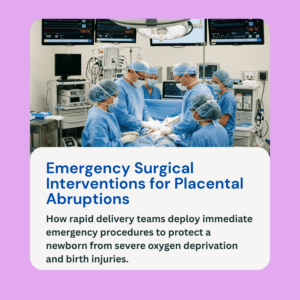
Emergency management for a neonatal stroke focuses entirely on stabilizing the infant, maintaining optimal brain perfusion, and preventing further cellular injury. Unlike adult care, clot-busting medications (like tPA) are rarely used in newborns due to a high risk of dangerous brain hemorrhages.
Instead, current medical treatments include:
1. Physiological Stabilization
Medical teams maintain the baby’s blood pressure, blood sugar, and oxygen levels within strict, optimal ranges. Ensuring the brain has a steady supply of well-oxygenated blood limits the spread of secondary tissue damage around the initial injury zone.
2. Anti-Seizure Medications
Because repetitive seizures can place extra stress on an injured brain, doctors use targeted medications like phenobarbital or levetiracetam to completely suppress abnormal electrical activity.
3. Therapeutic Hypothermia (Brain Cooling)
If the stroke occurs alongside a global lack of oxygen during a traumatic delivery (asphyxia), the baby may be placed on a specialized cooling blanket for 72 hours. Lowering the body temperature to 33.5°C (92.3°F) slows metabolic activity and dramatically limits the progression of brain cell death.
Long-Term Effects and Therapeutic Support
The long-term effects of a neonatal stroke vary heavily based on which region of the brain was impacted and how quickly the infant was stabilized. Because a newborn’s brain is still actively growing, it possesses incredible neuroplasticity—the ability to rewire itself and train healthy areas to take over functions previously managed by the injured tissue.
However, children may still face chronic challenges as they grow, including:
- Hemiplegic Cerebral Palsy: This is a motor disability characterized by weakness, stiffness, or spasticity on one side of the body opposite to the side of the brain injury.
- Developmental and Speech Delays: Difficulties with fine motor control, walking balance, or processing and articulating speech.
- Cognitive and Behavioral Issues: Challenges with attention, learning retention, or emotional regulation that become noticeable during early school years.
- Epilepsy: A lingering tendency to experience recurring seizures later in childhood.
To optimize outcomes, infants must be enrolled in early intervention programs as soon as they are discharged. Intensive physical therapy (PT), occupational therapy (OT), and speech-language therapy work in tandem to maximize a child’s functional independence and physical mobility.
Frequently Asked Questions (FAQ)
Is a neonatal stroke the same thing as a birth injury?
Not always, but they can be deeply connected. A stroke can happen naturally due to a mother’s blood-clotting disorder or a placental abnormality. However, if a medical professional uses excessive force with forceps, mismanages deep fetal distress, or delays an emergency C-section during a stuck delivery, that mechanical trauma or severe oxygen deprivation can directly cause a neonatal stroke.
Will a baby who had a stroke have another one?
Fortunately, the recurrence rate for a neonatal stroke is incredibly low (under 5% for most infants), provided there isn’t an untreated, severe congenital heart defect or a progressive genetic blood clotting disorder. For the vast majority of babies, it is a single, isolated event.
Can a doctor diagnose a stroke before the baby is born?
Yes, occasionally. Advanced fetal MRIs or detailed prenatal ultrasounds can sometimes identify a fetal stroke that occurred in utero, particularly if the mother experienced a severe medical trauma or vascular crisis during the second or third trimester.
How can parents advocate for a baby showing odd symptoms?
If you notice your baby is persistently favoring one side, having strange rhythmic eye or limb movements, or is too weak to cry or feed, trust your instincts. Demand an immediate evaluation by a pediatric neurologist or neonatologist, and ask directly whether a brain ultrasound or MRI is necessary to rule out neurological injuries.