
What Is a Neonatal Seizure and What Can Cause It?
Seizures in adults or older children are often easy to recognize, typically presenting as dramatic whole-body shaking or sudden loss of consciousness. In newborns, however, seizures look vastly different and can be exceedingly difficult to spot. A neonatal seizure—occurring within the first 28 days of an infant’s life—is a neurological emergency signaling abnormal electrical activity in the baby’s developing brain.
Because an infant’s central nervous system is still immature, newborn seizures are often the first major clinical warning sign of an underlying medical condition or brain injury. Understanding how to spot subtle infant seizure signs, knowing the primary neonatal seizures causes, and recognizing how these events connect to birth trauma is vital for parents navigating a high-risk delivery or NICU stay.
Recognizing the Subtle Signs of Neonatal Seizures
Unlike older children, newborns rarely experience generalized tonic-clonic convulsions. Instead, their seizures are often “subtle” or focal, easily mistaken for normal infant reflexes, uncoordinated movements, or startle responses. Medical staff and parents must pay close attention to unusual, repetitive behaviors:
Subtle Seizures: These are the most common type of seizures in newborns. Signs include repeated lip-smacking, tongue-thrusting, chewing or sucking motions, abnormal eye-rolling or fixed staring, rapid eye blinking, and rhythmic “bicycling” or “pedaling” movements of the legs.
Clonic Seizures: These involve slow, rhythmic jerking or twitching movements that focus on a specific part of the body, such as one arm, one leg, or one side of the face. Unlike normal infant jitters, clonic jerking does not stop when you gently hold the infant’s limb.
Tonic Seizures: These cause a sudden, sustained stiffening of the body or limbs. The baby may hold their arms or legs in an unusual, rigid posture or arch their back for several seconds.
Spasms and Apneic Seizures: These present as sudden, brief flexions or extensions of the body. In some cases, a seizure presents primarily as apnea—a sudden pause in breathing lasting longer than 20 seconds, often accompanied by a dramatic drop in heart rate (bradycardia) or bluish skin discoloration (cyanosis).
Primary Causes of Neonatal Seizures
Neonatal seizures are not a disease in themselves, but rather a symptom of an underlying neurological disruption. Identifying the root cause is the most critical step in providing effective treatment.
Hypoxic-Ischemic Encephalopathy (HIE): Severe oxygen deprivation during labor or delivery is the single leading cause of neonatal seizures, accounting for nearly half of all cases. When blood and oxygen flow to the brain is severely reduced during birth, brain cells become inflamed and damaged, triggering chaotic electrical activity within the first 24 to 48 hours of life.
Neonatal Stroke and Brain Hemorrhage: Reduced blood flow or ruptured blood vessels can cause localized strokes or bleeding inside the infant’s brain (such as intraventricular or subdural hemorrhages), particularly after traumatic deliveries involving forceps or vacuum extractors.
Central Nervous System Infections: Bacterial or viral infections—such as neonatal meningitis, encephalitis, sepsis, or congenital infections like herpes simplex virus (HSV)—can cause severe inflammation of the brain tissues, triggering seizures.
Metabolic and Electrolyte Imbalances: Significant shifts in the baby’s blood chemistry, including severe hypoglycemia (low blood sugar), hypocalcemia (low blood calcium), or hyponatremia (low blood sodium), disrupt normal nerve signaling and provoke seizure activity.
Genetic and Structural Brain Abnormalities: Malformations of the brain’s physical structure, congenital metabolic disorders, or rare genetic syndromes can disrupt electrical pathways, causing early-onset seizures.
Diagnostic Procedures
Determining the exact cause of a neonatal seizure requires a rapid, comprehensive diagnostic workup in the neonatal intensive care unit (NICU):
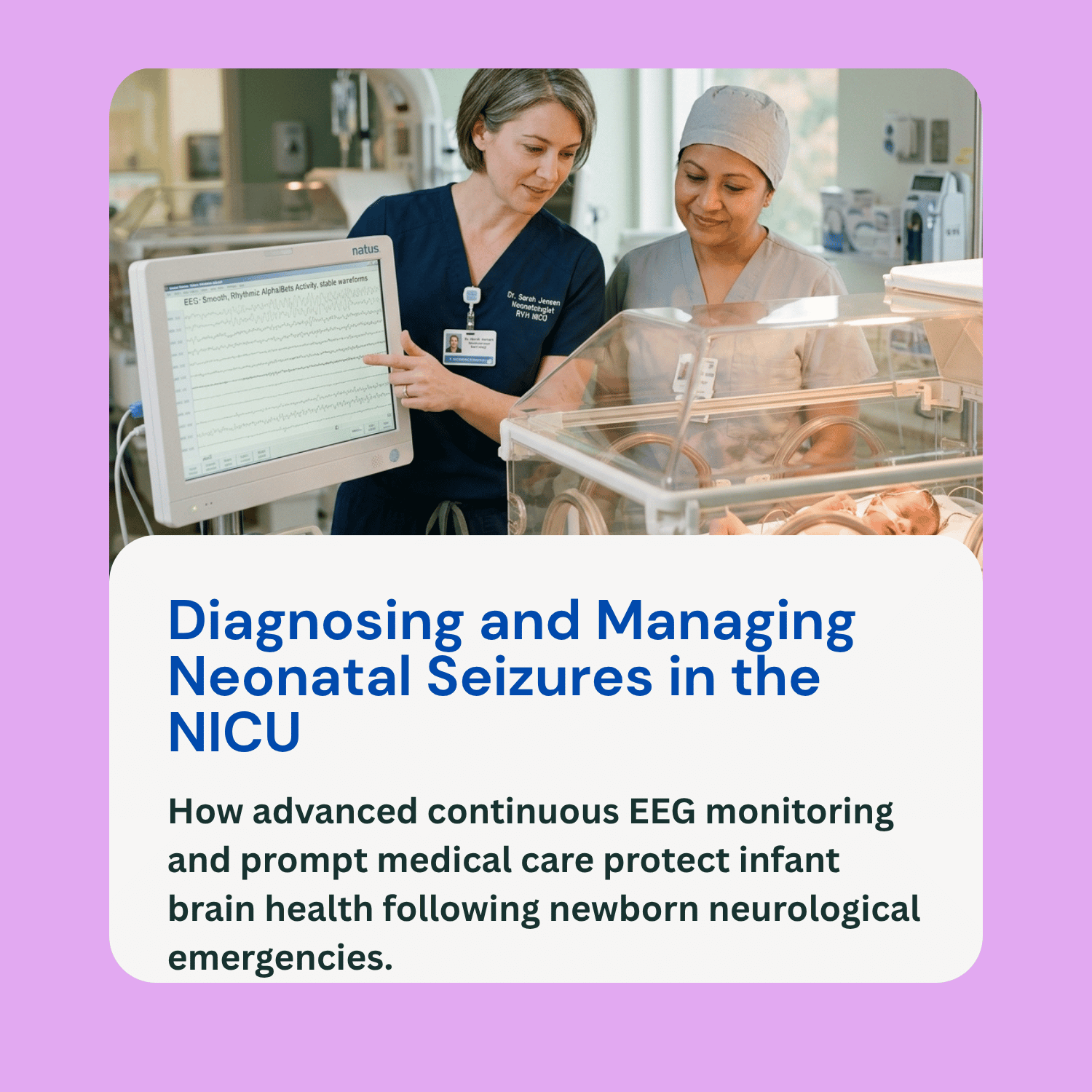
Electroencephalogram (EEG): Continuous video-EEG monitoring is the gold standard for diagnosing neonatal seizures. Because many subtle movements in newborns are non-epileptic, an EEG tracks actual electrical brain waves, allowing doctors to confirm seizure activity and distinguish electrical seizures from normal newborn motor patterns. Amplitude-integrated EEG (aEEG) is frequently used at the bedside for continuous monitoring.
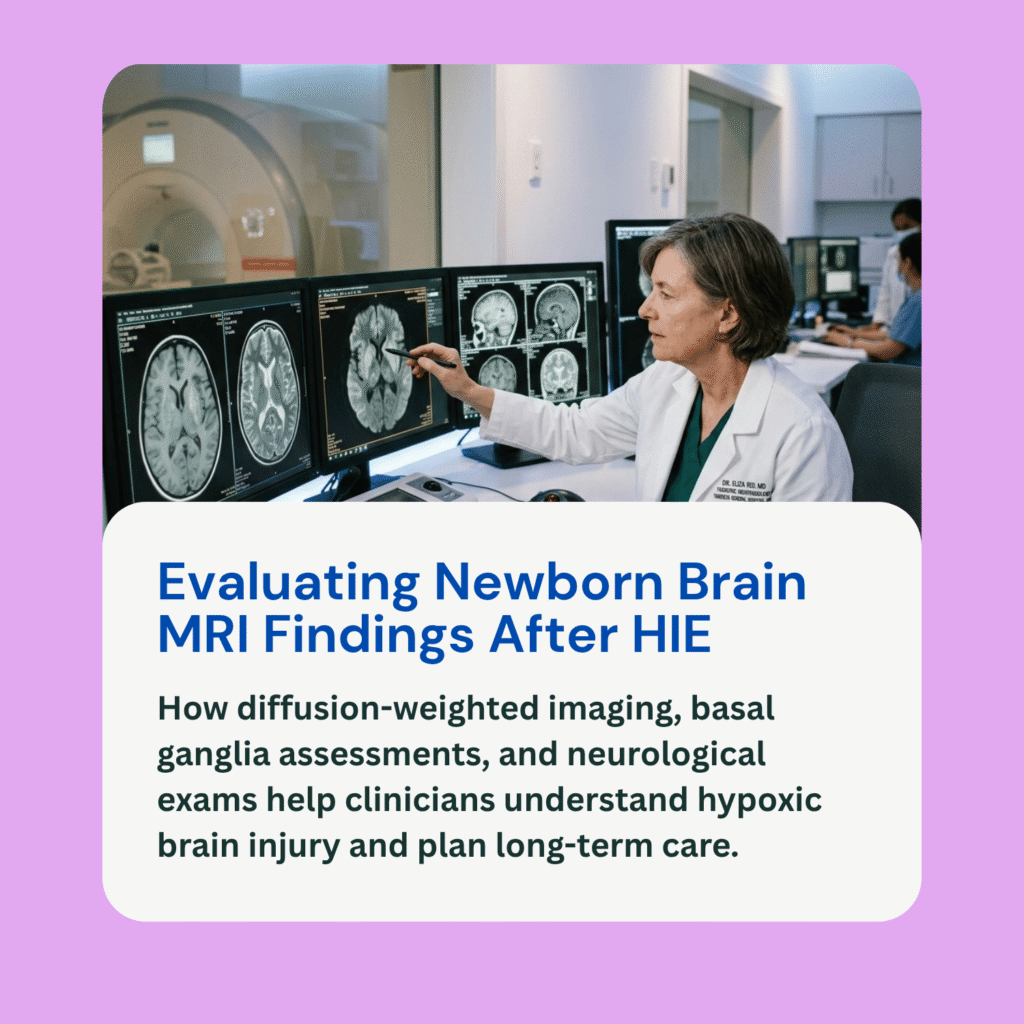
Neuroimaging: Magnetic Resonance Imaging (MRI) provides detailed, high-resolution images of the infant’s brain tissue to identify structural damage, swelling, strokes, or areas affected by HIE. Head ultrasounds and CT scans may also be used in emergencies to quickly check for intracranial bleeding.
Laboratory Testing: Blood tests immediately evaluate blood glucose, calcium, magnesium, and electrolyte levels. Lumbar punctures (spinal taps) and blood cultures are performed if doctors suspect meningitis or systemic infection.
Treatment and Long-Term Connection to Brain Injury
Treating neonatal seizures requires a two-pronged approach: halting the seizure activity to protect the brain and treating the root underlying condition.
Doctors administer fast-acting anticonvulsant medications—such as phenobarbital, levetiracetam (Keppra), or fosphenytoin—to control electrical spikes. Simultaneously, medical teams address the root cause, such as restoring blood sugar levels, administering antibiotics for infections, or initiating therapeutic hypothermia (cooling therapy) within the first 6 hours of life for infants with HIE.
The long-term prognosis for an infant experiencing neonatal seizures depends heavily on the cause and duration of the underlying brain insult. While some seizures caused by temporary metabolic imbalances resolve completely without lasting harm, seizures driven by severe HIE, stroke, or structural brain trauma carry a higher risk of long-term neurological conditions. These can include cerebral palsy, developmental delays, cognitive impairments, and post-neonatal epilepsy.
Frequently Asked Questions (FAQ)
How can I tell the difference between normal newborn jitters and a seizure?
Normal infant jitters or startle reflexes are usually triggered by a noise or sudden movement, involve rapid, fine trembling, and stop immediately if you hold the baby’s flexing limb. Seizure movements are typically rhythmic, unprovoked, accompanied by eye-rolling or breathing changes, and will continue even when you hold or gently press on the limb.
Do all neonatal seizures cause permanent brain damage?
No. Seizures themselves are a symptom of underlying stress. If the underlying cause—such as low blood sugar or a minor calcium deficiency—is corrected quickly, many babies recover without any permanent neurological damage. However, prolonged or untreated seizures can increase stress on brain tissues.
Can medical errors during delivery cause neonatal seizures?
Yes. If medical staff fail to monitor fetal distress, delay an emergency C-section, or mismanage labor, the resulting severe oxygen deprivation can lead to HIE, which frequently causes neonatal seizures within the first two days of life.
How long will a baby need to stay on seizure medication?
It varies based on cause and brain recovery. If electroencephalogram (EEG) readings normalize and the underlying trigger is resolved, many infants can be safely weaned off anti-seizure medications within a few weeks or months under a pediatric neurologist’s care.