

What Is a Nuchal Cord and Can It Cause a Birth Injury?
A nuchal cord occurs when the umbilical cord wraps 360 degrees around the fetus’s neck in the womb. It is one of the most common physical variations encountered in obstetrics, occurring in approximately 20% to 30% of all deliveries. In the vast majority of cases, a nuchal cord is loose, harmless, and resolves on its own or is easily slipped over the baby’s head by the delivery team without causing any complications.
However, when a nuchal cord is tightly wrapped—or wrapped multiple times (known as a multiple nuchal cord)—the physiological dynamic changes. During uterine contractions, the mechanical stress of labor can pull the cord tight, restricting blood flow and oxygen delivery to the fetus or compressing the delicate blood vessels in the baby’s neck. A primary question for expectant parents and legal advocates is whether a nuchal cord birth injury can occur. While a nuchal cord itself is rarely dangerous on its own, an unmanaged, tight nuchal cord can lead to acute oxygen deprivation, severe fetal distress, and long-term neurological injuries.
Types of Nuchal Cords and Pathophysiological Mechanisms
Obstetricians categorize nuchal cords into structural types based on how the cord loops around the neck, which influences how likely it is to cause complications during labor:
Type A Nuchal Cord (Unlocked Loop): The umbilical cord wraps loosely around the neck in a sliding loop. It can freely slip over the baby’s head or torso as the baby moves during pregnancy or labor.
Type B Nuchal Cord (Locked Loop): The cord forms a true knot-like structure around the neck that cannot easily unwind or slip off during fetal descent, increasing the risk of mechanical tightening during labor.
When a nuchal cord is tight, two primary physiological mechanisms threaten fetal health during labor. First, physical compression of the umbilical cord’s blood vessels restricts the exchange of oxygenated blood between the placenta and the fetus. Second, direct compression of the baby’s carotid arteries and jugular veins in the neck can disrupt blood circulation to the brain, causing acute cerebral hypoxia, sudden bradycardia, and increased central venous pressure.
Risk Factors and Clinical Monitoring
While nuchal cords occur naturally due to normal fetal movement and buoyant amniotic fluid, certain factors increase the likelihood of tight or multiple loops:
An excessively long umbilical cord provides additional length to loop around the neck multiple times. Polyhydramnios—an excess of amniotic fluid—allows the fetus greater freedom to move and entangle itself in the cord. Gestational factors such as carrying twins or higher-order multiples, post-term pregnancies, or having a particularly active fetus also increase the chance of cord entanglement.
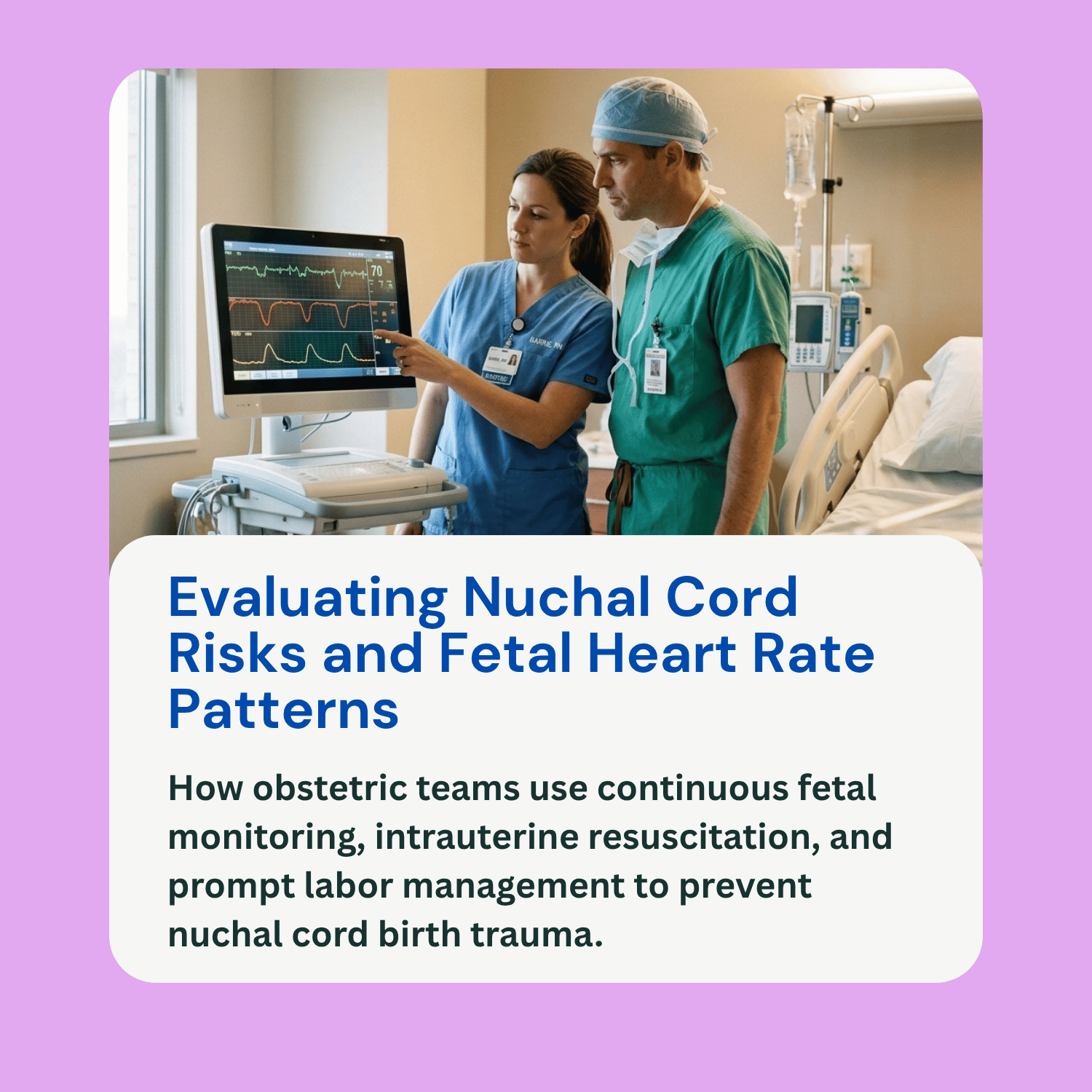
Evaluating Fetal Stress via Electronic Fetal Monitoring: Ultrasound imaging can detect a nuchal cord before or during labor, but the primary tool for evaluating whether a nuchal cord is causing harm is continuous Electronic Fetal Monitoring (EFM). Compression of the umbilical cord during contractions produces classic variable decelerations—abrupt drops in fetal heart rate that resemble sharp “V” or “W” shapes on the monitoring strip. If cord compression becomes prolonged or severe, these variable decelerations may deepen, linger, or transition into late decelerations and persistent bradycardia, signaling that the baby is suffering from significant oxygen starvation.
Emergency Delivery Management and Resuscitation
When electronic monitoring reveals that a tight nuchal cord is causing fetal distress, the labor team must initiate rapid medical interventions to protect the baby:
Intrauterine Resuscitation: Initial conservative steps focus on relieving cord compression and optimizing oxygen delivery. These include changing the mother’s positioning to her left or right side to shift fetal weight off the cord, administering an intravenous fluid bolus to expand maternal blood volume, stopping oxytocin (Pitocin) infusions to slow down contractions, and providing supplemental oxygen if indicated.
Delivery Room Interventions: As the baby’s head emerges during vaginal delivery, the clinician checks the baby’s neck for the cord. If the cord is loose, the practitioner simply slips it gently over the baby’s head or shoulders. If the cord is wrapped too tightly to slip off, the doctor may perform a somersault maneuver or, as a last resort, clamp and cut the umbilical cord before the baby’s shoulders are delivered. If the baby cannot safely descend through the birth canal due to a short or tight cord, or if fetal heart monitoring reveals non-reassuring heart rate patterns that fail to resolve, an emergency C-section or operative delivery is necessary.
Potential Long-Term Birth Injuries and Complications
When a tight nuchal cord goes unrecognized or unmanaged, prolonged oxygen deprivation can lead to severe neonatal complications and long-term neurological conditions:
Hypoxic-Ischemic Encephalopathy (HIE): Severe, sustained umbilical cord or carotid artery compression deprives the brain tissue of oxygen and blood flow, leading to HIE—a devastating brain injury characterized by cellular necrosis and metabolic failure.
Cerebral Palsy and Cognitive Delays: Secondary damage from HIE or profound birth asphyxia can cause permanent motor impairments, cerebral palsy, developmental delays, learning disabilities, and speech difficulties.
Neonatal Seizures and Organ Dysfunction: Acute oxygen loss caused by a tight nuchal cord can trigger neonatal seizures within the first 24 to 48 hours of life, as well as temporary damage to other vital organs like the heart, kidneys, and lungs.
Anemia and Hypovolemic Shock: If a tight nuchal cord is clamped and cut prematurely before the baby’s body is fully delivered, or if blood flow through the cord is obstructed for an extended period, the baby can suffer significant blood loss or hypovolemic shock.
Frequently Asked Questions (FAQ)
Can an ultrasound show if a nuchal cord is wrapped tightly?
While a routine or color Doppler ultrasound can show the presence of an umbilical cord around the baby’s neck, it cannot reliably measure how tightly the cord is wrapped or predict whether it will cause problems during labor. Continuous fetal heart rate monitoring during labor is the primary method used to evaluate whether the cord is causing stress.
Is a nuchal cord a reason to schedule an automatic C-section?
No. Because up to one-third of healthy babies are born with a nuchal cord without any complications, the presence of a nuchal cord alone is not an automatic reason for a C-section. Most babies with a nuchal cord are delivered safely vaginally, provided the medical team closely monitors the fetal heart rate trace.
How does a tight nuchal cord cause Hypoxic-Ischemic Encephalopathy (HIE)?
A tight nuchal cord causes HIE by physically compressing the umbilical blood vessels or the carotid arteries in the neck during labor. This compression cuts off the supply of oxygenated blood to the brain, causing acute cellular tissue death and brain swelling.
When does a nuchal cord birth injury involve medical negligence?
While a nuchal cord occurs naturally, a birth injury may result from medical negligence if healthcare providers fail to monitor the fetal heart rate properly, misinterpret persistent variable or late decelerations, delay intrauterine resuscitation, or fail to perform a timely C-section when the fetus shows clear signs of oxygen starvation.