
What Are Umbilical Cord Birth Injuries?
Throughout pregnancy, the umbilical cord serves as a literal lifeline between the mother and the developing fetus. This complex structure carries oxygenated, nutrient-rich blood from the placenta to the baby while simultaneously carrying waste products away. Because a fetus does not use its lungs to breathe fluid in the womb, it is entirely dependent on this continuous, pressurized vascular loop for its survival, organ development, and neurological health.
When a mechanical or structural complication disrupts this flow of blood during pregnancy, labor, or delivery, the consequences can be immediate and severe. A prolonged interruption in blood flow can result in permanent umbilical cord birth injuries, often secondary to acute oxygen deprivation. Understanding how these issues occur, how medical teams monitor them, and the clinical outcomes of severe cord complications is essential for families seeking clear, objective medical facts about a complicated delivery.
The Anatomy of the Lifeline: How the Umbilical Cord Functions
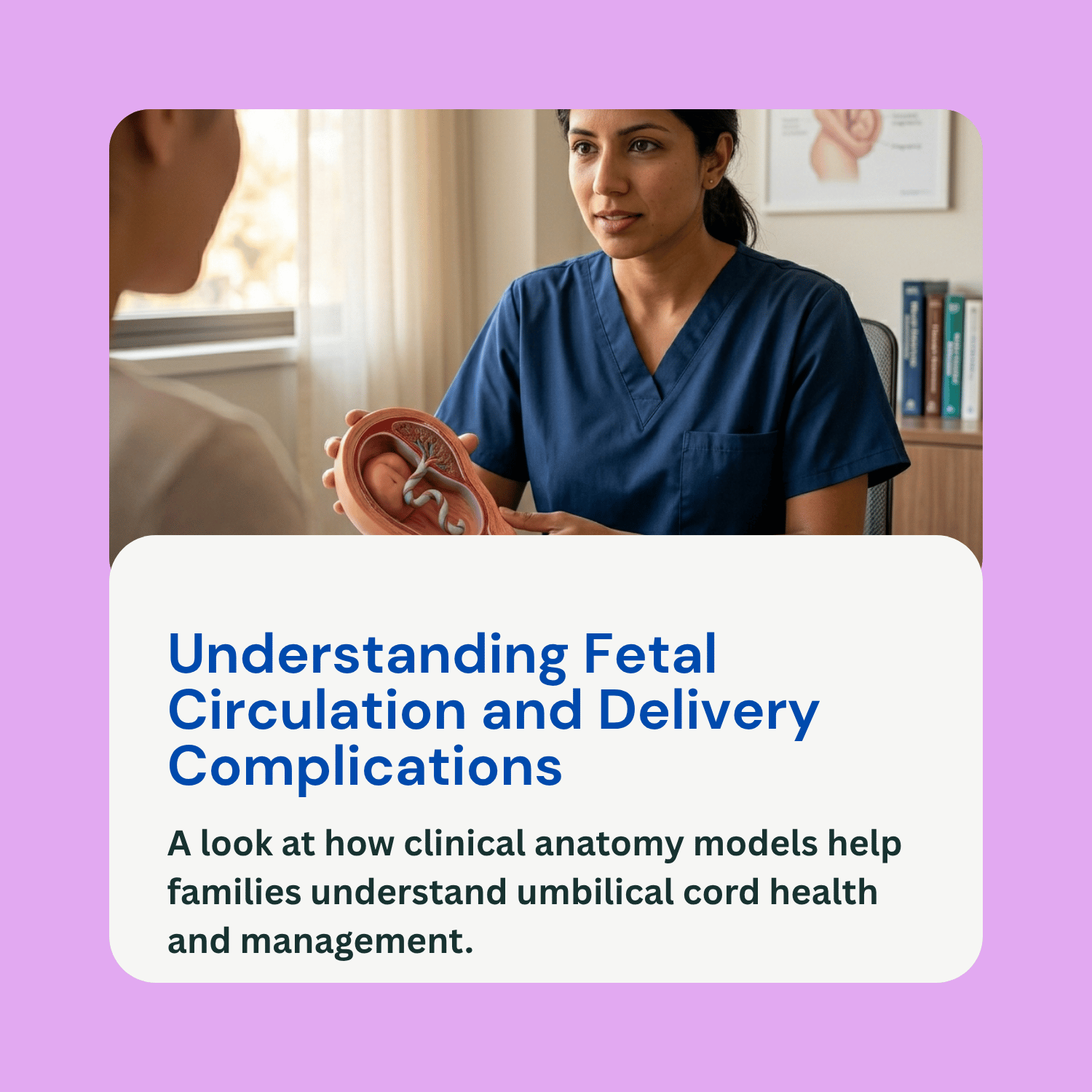
Under normal anatomical conditions, a healthy umbilical cord contains three distinct blood vessels: two small arteries and one large vein. The vein is responsible for delivering fresh oxygen and nutrients from the maternal blood supply via the placenta, while the two arteries return deoxygenated blood and waste back to the placenta to be cleared.
To protect these vital channels from external forces, the vessels are encased and insulated by a thick, gelatinous substance known as Wharton’s jelly, all wrapped within a smooth protective outer membrane.
Wharton’s jelly plays a vital defensive role during pregnancy and childbirth. It is highly elastic and specifically designed to prevent the blood vessels inside from kinking, twisting, or collapsing when the baby moves or when the uterus contracts during labor. However, this natural buffer has limits. If the pressure exerted on the cord exceeds the protective threshold of Wharton’s jelly, or if the cord is structurally compromised (such as having a thin diameter or a lack of sufficient jelly), the blood vessels within can become occluded, restricting oxygen delivery to the infant’s brain and vital organs.
Types of Umbilical Cord Birth Injuries
Umbilical cord birth injuries can manifest in several distinct ways during the intrapartum (labor and delivery) period. The most common structural and mechanical issues include:
1. Umbilical Cord Compression
Cord compression occurs when the umbilical cord is physically squeezed between the baby’s body and the mother’s pelvic bones or the uterine wall. This frequently happens during intense contractions, especially if the amniotic fluid levels are unusually low (a condition known as oligohydramnios), leaving less fluid cushioning to protect the cord from shifting pressures.
2. Umbilical Cord Prolapse
A prolapsed cord is an acute medical emergency that occurs when the umbilical cord slips through the cervix and enters the birth canal ahead of the baby during labor. This typically happens after the amniotic sac ruptures, particularly if the baby is premature, in a breech position, or has not yet descended into the pelvis. As the baby descends into the birth canal, its head or body puts direct, continuous pressure on the prolapsed cord, completely shutting off the fetal blood and oxygen supply.
3. Nuchal Cord
A nuchal cord occurs when the umbilical cord wraps 360 degrees around the baby’s neck. While minor or loose nuchal cords are relatively common and often harmless, a tight nuchal cord can stretch and constrict during descent through the birth canal, compressing both the cord vessels and the baby’s jugular veins, leading to localized restriction of blood flow to the brain.
4. True Knots
As a baby moves around in the amniotic sac during early pregnancy, it can occasionally loop through the cord, forming a true knot. While many knots remain loose throughout pregnancy, they can tighten progressively during labor as the baby descends, completely cutting off circulation.
The Pathophysiology of Oxygen Deprivation (Hypoxia)
When umbilical cord birth injuries restricts blood flow, the baby experiences a combination of hypoxia (low oxygen in the blood) and ischemia (restricted blood flow to tissues), a combined state clinically referred to as birth asphyxia.
If the restriction is brief, the fetal cardiovascular system compensates through a process called “the diving reflex,” redirecting oxygenated blood away from non-essential organs, like the skin, gastrointestinal tract, and kidneys, to protect the brain, heart, and adrenal glands. However, if the cord remains compressed or occluded past a critical threshold, these compensatory mechanisms fail.
Without oxygen, brain cells cannot maintain their electrical gradients or regular cellular functions, leading to an immediate cellular energy crisis. This triggers a destructive chain reaction: fluid rapidly builds up inside the cells, causing them to swell (cytotoxic edema), and if oxygenation is not restored within a critical window, these cells break down and die. This condition is diagnosed as Hypoxic-Ischemic Encephalopathy (HIE) and can lead to a secondary wave of cell damage once blood flow is restored during resuscitation.
How Medical Providers Monitor and Detect Cord Complications
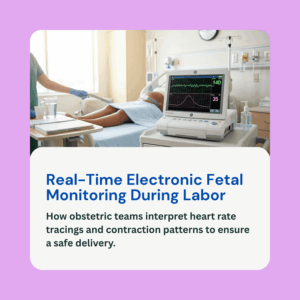
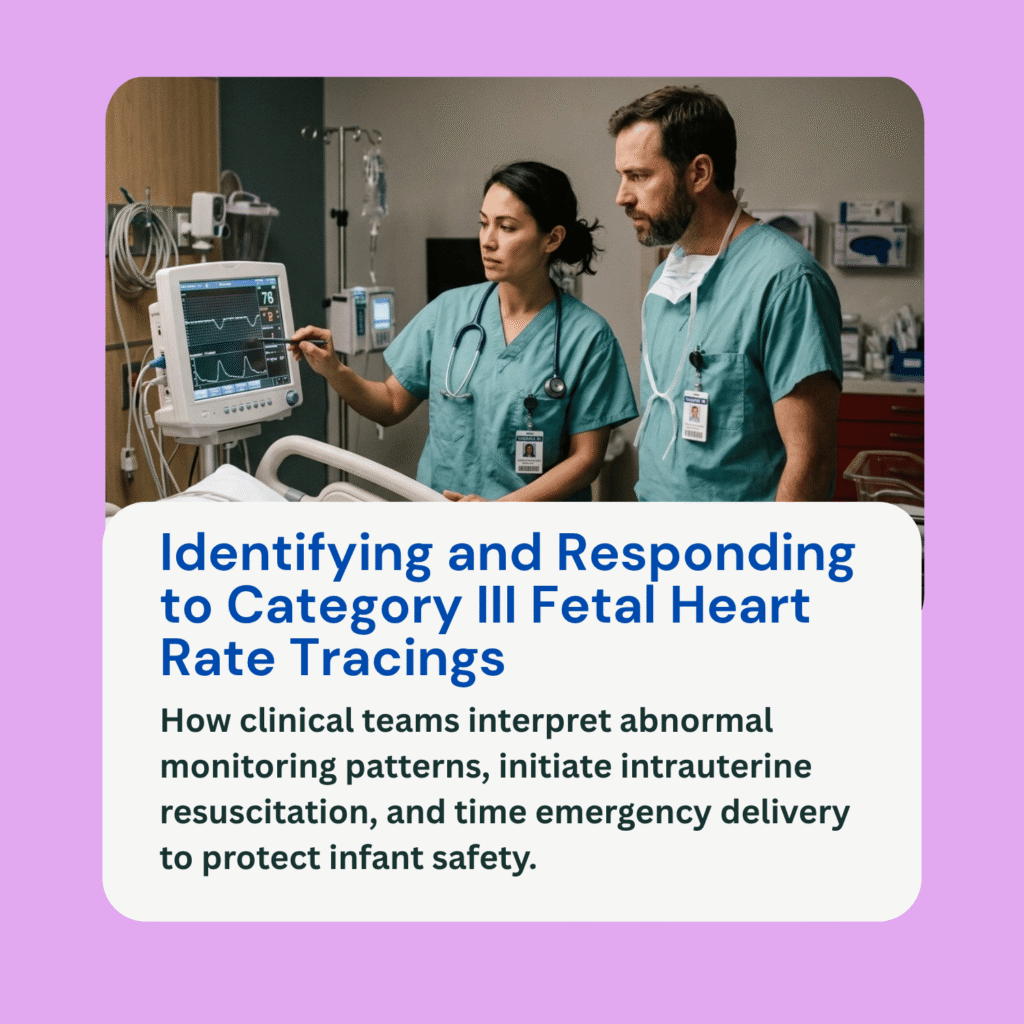
Because umbilical cord birth injuries are hidden from direct view inside the womb, medical staff rely heavily on continuous Electronic Fetal Monitoring (EFM) to track how well the baby is tolerating labor. Cord complications produce highly characteristic patterns on a fetal heart rate monitor that indicate fetal distress:
- Variable Decelerations: These are sharp, sudden drops in the fetal heart rate that form a distinct “V”, “U”, or “W” shape on the monitoring strip. They typically occur in direct alignment with uterine contractions and signal that the cord is being temporarily squeezed.
- Prolonged Decelerations: If a deceleration lasts for more than two minutes, it indicates a prolonged, uncorrected drop in fetal heart rate, which is common during an unmanaged cord prolapse or a severely tightened knot.
- Loss of Variability: A flatlined heart rate reading on the monitor indicates that the baby’s central nervous system is becoming depressed due to prolonged oxygen deprivation.
When these warning signs appear, medical staff must intervene immediately to relieve the pressure on the cord. Standard initial interventions include changing the mother’s physical position to shift the baby’s weight off the cord, administering amniotic fluid back into the uterus (amnioinfusion), or administering oxygen to the mother.
Long-Term Neurological Impact of Severe Cord Injuries
The long-term outlook for a child who experienced umbilical cord birth injuries depends entirely on the duration and severity of the oxygen deprivation, as well as how quickly medical interventions were initiated. Brief episodes of cord compression usually resolve with no lasting effects. However, severe, uncorrected deprivation can lead to permanent neurological conditions, including:
- Cerebral Palsy (CP): A group of permanent movement and posture disorders caused by damage to the motor control centers of the developing brain.
- Developmental and Cognitive Delays: Difficulties with speech, memory, learning, and executive functioning that become apparent as the child reaches school age.
- Epilepsy or Seizure Disorders: Chronic seizure disorders resulting from damaged, hyperactive electrical pathways in brain tissue affected by hypoxia.
Clinical Protocols for Managing Urgent Cord Issues
When an acute cord complication like a prolapse is identified, standard medical protocols require immediate, decisive action. For a cord prolapse, a clinician will often physically hold the baby’s head up off the cord to prevent total occlusion while the surgical team prepares for an immediate emergency C-section. The time elapsed between the onset of severe fetal distress and delivery is the single most critical factor in minimizing the risk of permanent brain damage or long-term disability, ensuring the child can transition safely to specialized neonatal intensive care.