

What Are the Signs of a Newborn Brain Injury?
The birth of a child is a monumental milestone, but when complications arise during labor or delivery, joy can quickly turn to deep concern. One of the most critical challenges a family can face is a birth trauma that affects the infant’s neurological system. Recognizing the earliest signs of newborn brain injury is absolutely vital, as early medical detection directly impacts how effectively healthcare teams can intervene to minimize long-term developmental complications.
For parents navigating the stressful days following a difficult delivery, medical terminology can feel incredibly opaque. This guide is designed to provide clear, clinically accurate, and accessible information on the physical and behavioral indicators of neonatal neurological trauma. By understanding what to look for, families can better collaborate with specialists to advocate for their child’s immediate and ongoing care.
Immediate Indicators in the Delivery Room
In many cases, the primary signs of newborn brain injury emerge immediately at birth. Obstetricians, pediatricians, and labor nurses are specifically trained to look for an acute cluster of physical symptoms indicating that an infant’s brain may have suffered from oxygen deprivation or physical trauma during transit through the birth canal.
- Respiratory Distress or Apnea: A baby who fails to take their first breath spontaneously, requires immediate resuscitation, or demonstrates shallow, irregular, or labored breathing.
- Profound Lethargy: An infant who is unusually drowsy, completely unresponsive to physical touch or sound, or unable to wake up for initial feedings.
- Abnormal Muscle Tone: The infant may appear exceptionally limp and “floppy” (hypotonia), indicating a lack of central nervous system control, or conversely, exceptionally rigid and stiff (hypertonia).
- Depressed Reflexes: A complete absence or noticeable weakness in a newborn’s natural, primitive reflexes, such as the sucking reflex, the rooting reflex, or the Moro (startle) reflex.
Physical and Behavioral Signs of Newborn Brain Injury
As a baby moves from the delivery room into the newborn nursery or Neonatal Intensive Care Unit (NICU), additional physical and neurological symptoms may manifest. These signs of newborn brain injury stem from localized swelling, altered electrical activity in the brain, or systemic metabolic stress.
Neonatal Seizures
Seizures are among the most definitive signs of newborn brain injury. Unlike adult seizures, which often involve clear grand mal convulsing, newborn seizures can be incredibly subtle and easily missed. They may manifest as:
- Repetitive, rhythmic blinking or rolling of the eyes.
- Uncontrolled “bicycling” or paddling motions of the legs and arms.
- Brief, sudden pauses in breathing paired with a dropping heart rate.
- Rhythmic twitching of a single limb or one side of the face.
Cranial and Facial Anomalies
Physical indicators on the baby’s head can sometimes point toward underlying trauma. While standard molding from the birth canal is normal, asymmetric swelling, deep lacerations, extreme bruising from forceps or vacuum extractors, or an unusually small head circumference (microcephaly) warrant close neurological evaluation.
Extreme Irritability and High-Pitched Crying
While all newborns cry, a baby dealing with neurological distress often exhibits a distinct, continuous, piercing, high-pitched cry that sounds noticeably different from a standard hunger or discomfort cry. These infants are frequently inconsolable, resisting soothing techniques, rocking, or skin-to-skin contact due to neurological hyper-reactivity.
The Role of Apgar Scores and Diagnostic Testing
When medical professionals suspect potential neurological issues, they rely on objective diagnostic protocols rather than visual observation alone to confirm the presence and extent of the condition.
- Apgar Scores: Administered at 1 and 5 minutes (and every 5 minutes thereafter if scores remain low), this test scores skin color, heart rate, reflexes, muscle tone, and respiration on a scale from 0 to 10. A persistently low Apgar score (typically 3 or below) past the 5-minute mark is one of the key clinical signs of newborn brain injury.
- Umbilical Cord Blood Gas Analysis: This test measures the exact pH and gas levels in the blood remaining within the umbilical cord immediately after birth. A highly acidic pH level (severe acidosis) proves that the infant’s tissues were deprived of oxygen during labor.
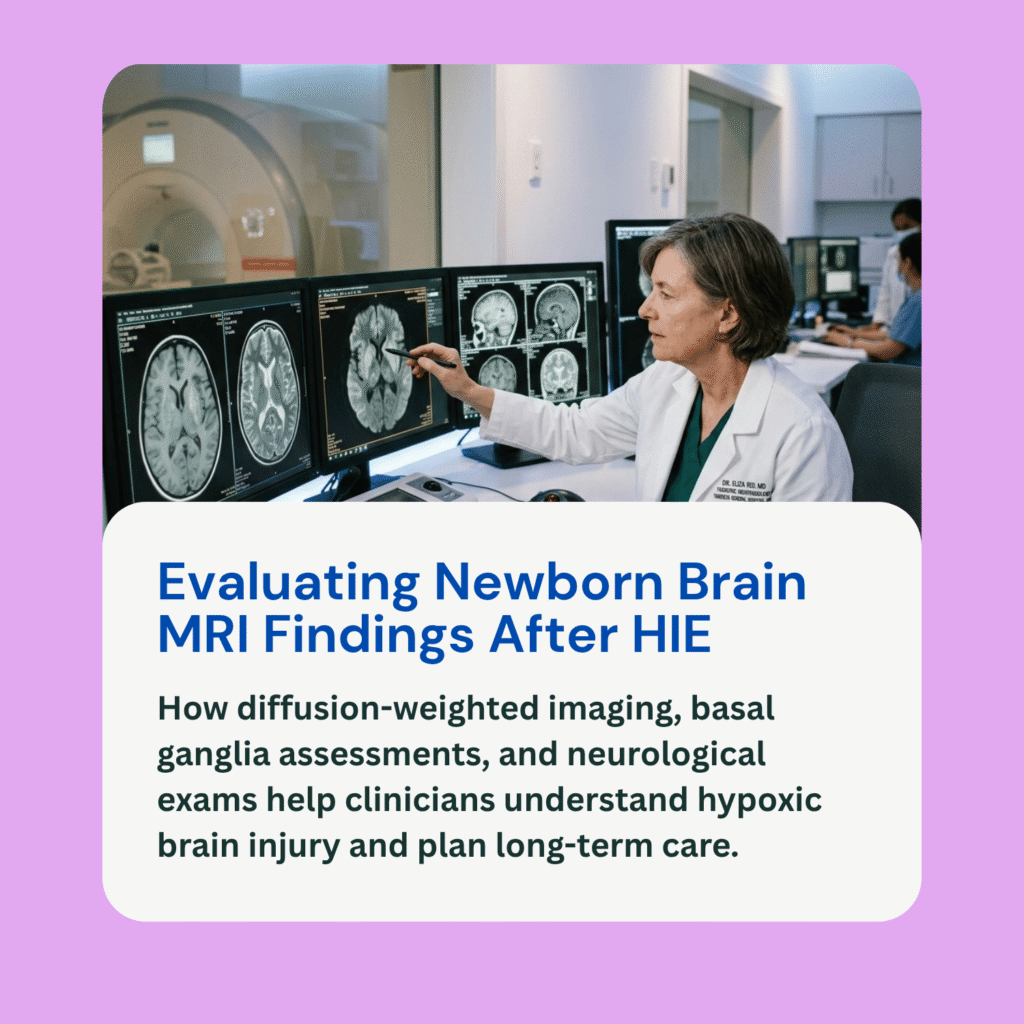
- Neuroimaging and Monitoring: If clinical signs of newborn brain injury are present, physicians will order an Electroencephalogram (EEG) to map the brain’s electrical pathways and monitor for silent seizures. They will also utilize a cranial ultrasound or a brain Magnetic Resonance Imaging (MRI) scan to visually locate areas of tissue swelling, hemorrhage, or oxygen deprivation.
Subtle Developmental Signs That Appear Later
Not all neurological trauma is immediately obvious in the nursery. In some instances, mild or localized injuries only become apparent months after delivery as the child misses critical physical and cognitive milestones. Parents should monitor their growing infant for these delayed signs of newborn brain injury:
- Hand Preference Before 12 Months: Infants naturally use both hands equally early in life. If a baby consistently favors one hand while ignoring or stiffening the other, it can indicate a motor tract injury on one side of the brain.
- Feeding and Swallowing Difficulties: Persistent issues with latching, frequent choking or gagging during bottle or breast feedings, or an inability to coordinate sucking and swallowing reflexes smoothly.
- Missed Motor Milestones: A significant, persistent delay in a baby’s ability to hold up their head independently, roll over, sit up without support, crawl, or reach for objects.
If you observe any of these symptoms or developmental delays, consult a pediatric neurologist or specialized pediatrician immediately. Prompt diagnostic clarity empowers families to explore early intervention therapies that leverage an infant’s neuroplasticity to build new pathways, maximizing their long-term functional capabilities.
Frequently Asked Questions (FAQ)
What are the most common immediate signs of newborn brain injury at birth?
The most common immediate signs of newborn brain injury in the delivery room include respiratory failure or an inability to breathe independently, a profoundly limp or stiff body texture, an exceptionally low Apgar score that does not improve by the 5 or 10-minute mark, and a total absence of primitive newborn reflexes like sucking or startling.
How do I know if my baby is having a silent neonatal seizure?
Silent neonatal seizures do not always cause generalized shaking. Instead, look for subtle, repetitive movements such as continuous lip-smacking, rhythmic eye-blinking, tongue thrusting, or an isolated limb twitching rhythmically. Temporary pauses in breathing paired with a color change can also indicate underlying seizure activity.
Can a newborn brain injury happen without any visible bruising or head trauma?
Yes. Many of the most severe conditions, such as hypoxic-ischemic encephalopathy (HIE), are internal injuries caused by a lack of oxygenated blood flow to the brain cells. These conditions regularly occur without any external bruising, cuts, or physical marks on the baby’s scalp or face.
When should I seek a medical evaluation for developmental signs of newborn brain injury?
You should seek a comprehensive pediatric neurological evaluation if your infant misses major developmental milestones (like head control by 4 months or sitting by 9 months), displays rigid or entirely floppy muscle tone, struggles consistently with basic swallowing, or shows a stark physical preference for using only one side of their body.