
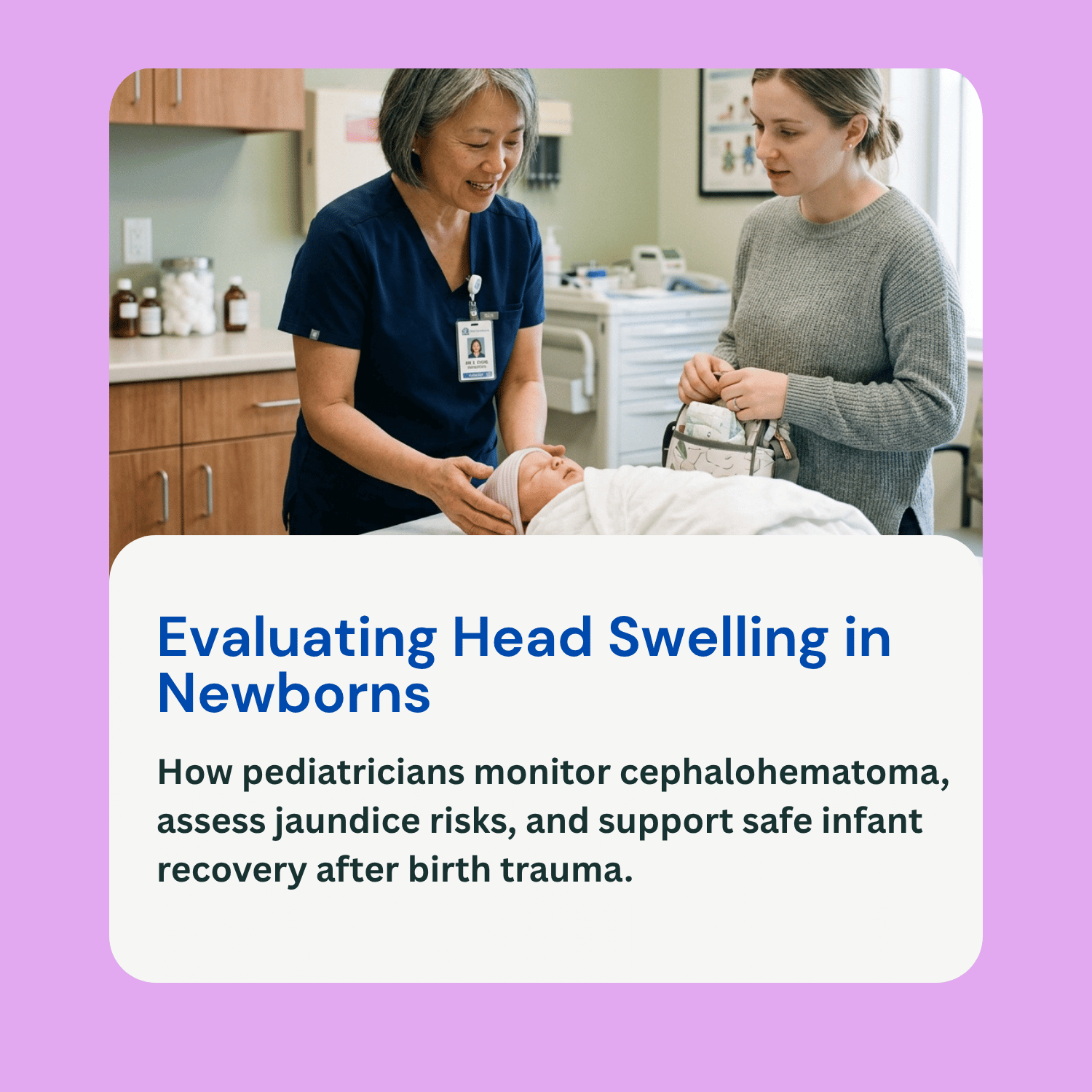

What Is Cephalohematoma in a Newborn?
Welcoming a newborn into the world is an emotional experience, but noticing unexpected swelling or a firm bump on your baby’s head shortly after birth can cause immediate worry. One of the most common birth-related head injuries is a cephalohematoma newborn diagnosis. This condition occurs when damaged blood vessels pool blood under the infant’s scalp, specifically between the skull bone and its protective outer membrane, the periosteum.
While discovering a firm bulge on your baby’s head can be frightening, understanding how a cephalohematoma develops, how it differs from other types of head swelling, and what symptoms to monitor can give parents peace of mind. This educational guide breaks down the primary causes, symptoms, treatments, potential complications, and key signs that warrant medical attention.
Understanding How Cephalohematoma Develops and Common Causes
A cephalohematoma forms when physical pressure and friction during labor rupture small blood vessels supplying the periosteum. As blood slowly leaks out, it collects underneath this fibrous membrane. Because the periosteum binds firmly to the edges of individual skull bones, the pooled blood cannot cross the anatomical suture lines dividing the baby’s skull plates. As a result, the swelling remains strictly confined to one side of the head, typically over the parietal or occipital bones.
Several factors during labor and delivery increase the likelihood of a baby developing a cephalohematoma. A primary cause is the use of birth-assistive instruments, such as vacuum extractors or forceps. The traction and suction forces applied to the baby’s scalp during an assisted delivery can pull the periosteum away from the bone, tearing delicate blood vessels. Prolonged or difficult labor, particularly when a large baby passes through a narrow birth canal, also subjects the fetal head to continuous mechanical friction against the mother’s pelvic bones. Mothers giving birth for the first time or experiencing difficult fetal positioning, such as breech presentations, face higher rates of infant cephalohematoma as well.
Recognizing Symptoms and Key Differences
Unlike caput succedaneum—a harmless, soft fluid swelling that is present immediately at birth and crosses skull suture lines—a cephalohematoma typically develops more slowly. It often becomes noticeable several hours or up to two days after delivery as blood gradually accumulates under the membrane.
The raised area feels soft and slightly squishy at first, but over the following days, it often hardens or feels firm to the touch as the pooled blood begins to calcify and reabsorb. The raised bump is strictly localized and does not cross over the center ridge or suture lines of the infant’s skull. The baby usually shows no signs of pain when the area is gently touched, though the skin over the swelling may occasionally appear slightly bruised.
Treatment and Healing Timeline
In the vast majority of cases, a cephalohematoma requires no medical or surgical treatment. The body naturally reabsorbs the pooled blood over time, much like a severe bruise.
Parents are strongly advised never to attempt draining or needle-aspirating the fluid bump. Inserting a needle into the blood collection breaks the sterile barrier, introducing a significant risk of introducing bacteria and causing severe, deep-seated bacterial infections. Doctors recommend a conservative “watch and wait” approach, simply monitoring the bump during routine pediatric checkups. Most cephalohematomas resolve on their own within two weeks to three months, depending on the volume of accumulated blood.
Potential Complications to Watch For
Although most cephalohematomas resolve safely, the breakdown of pooled blood can trigger secondary health complications that require pediatric management:
Infant Jaundice (Hyperbilirubinemia): As the body breaks down the trapped red blood cells inside the hematoma, it releases bilirubin, a yellow pigment. If the volume of blood is large, the liver may struggle to process the excess bilirubin quickly, leading to yellowing of the baby’s skin and eyes.
Anemia: In rare instances where a cephalohematoma is exceptionally large, enough blood can collect under the periosteum to lower the baby’s overall red blood cell count, resulting in neonatal anemia and severe lethargy.
Infection (Infected Cephalohematoma): Though uncommon, trapped blood can become infected by circulating bacteria, leading to a localized abscess or osteomyelitis (skull bone infection), which requires immediate antibiotic treatment.
Skull Fractures: In severe cases involving significant birth trauma or improper forceps application, a linear skull fracture may exist beneath the cephalohematoma.
When Parents Should Seek Medical Attention
While a cephalohematoma usually heals naturally, parents should contact their pediatrician or seek medical evaluation if they observe any of the following warning signs:
The baby develops noticeable yellowing of the skin or eyes, indicating worsening jaundice. The infant becomes unusually lethargic, difficult to wake, or displays poor feeding habits. The raised area on the head shows signs of acute infection, such as increased warmth, redness, pus, or rapid expansion. Additionally, if the baby develops a fever, cries inconsolably when touched, or if the head swelling persists past three months without shrinking, a prompt medical checkup is necessary.
Frequently Asked Questions (FAQ)
Is a cephalohematoma dangerous for a newborn’s brain?
No. A cephalohematoma occurs entirely outside the skull bone beneath the periosteum. Because the blood remains outside the protective skull, it does not exert physical pressure on the brain tissue underneath and does not cause brain damage on its own.
How is a cephalohematoma different from caput succedaneum?
Caput succedaneum is a swelling of fluid in the scalp tissue that is present right at birth, soft to the touch, and freely crosses skull suture lines, usually resolving in a few days. A cephalohematoma is a collection of blood under the skull membrane that develops hours after birth, stays strictly on one side of the skull, and takes weeks or months to resolve.
Can a cephalohematoma leave a permanent dent or bump on the baby’s head?
As a cephalohematoma heals, it undergoes calcification, often leaving a firm, hardened outer rim that can temporarily feel like a crater or hard bump. Over time, the body’s natural bone remodeling process reshapes the skull, and the bump typically disappears completely as the child grows.
Is a cephalohematoma considered a birth injury caused by medical errors?
Not always, as it can occur during natural, unassisted labor due to pressure in the birth canal. However, if a healthcare provider applies excessive or improper force with vacuum extractors or forceps during an assisted delivery, the resulting cephalohematoma may be considered a preventable birth trauma.