
3rd and 4th Degree Tear Malpractice: Your Rights After a Traumatic Birth
While much of the discussion surrounding birth injuries focuses on the newborn, the physical trauma experienced by the mother is a critical and often overlooked aspect of a traumatic delivery. Perineal tearing is a common occurrence during vaginal childbirth, but the severity of these injuries is categorized into four distinct degrees. When a mother suffers from 3rd and 4th degree tear malpractice, she is often left with life-altering physical complications that extend far beyond the initial recovery period. These severe injuries, often referred to as Obstetric Anal Sphincter Injuries (OASIS), occur when the tearing extends into the anal sphincter or the rectal mucosa.
In many cases, a severe tear is an unavoidable consequence of a difficult delivery involving a large baby or a rapid second stage of labor. However, medical negligence often plays a significant role in both the occurrence of these tears and the subsequent failure to repair them correctly. If a doctor uses forceps inappropriately or performs a midline episiotomy without clinical necessity, they significantly increase the risk of a catastrophic tear. Furthermore, if the medical team fails to diagnose the extent of the damage immediately after birth, the window for a successful primary repair may close, leading to permanent disability.
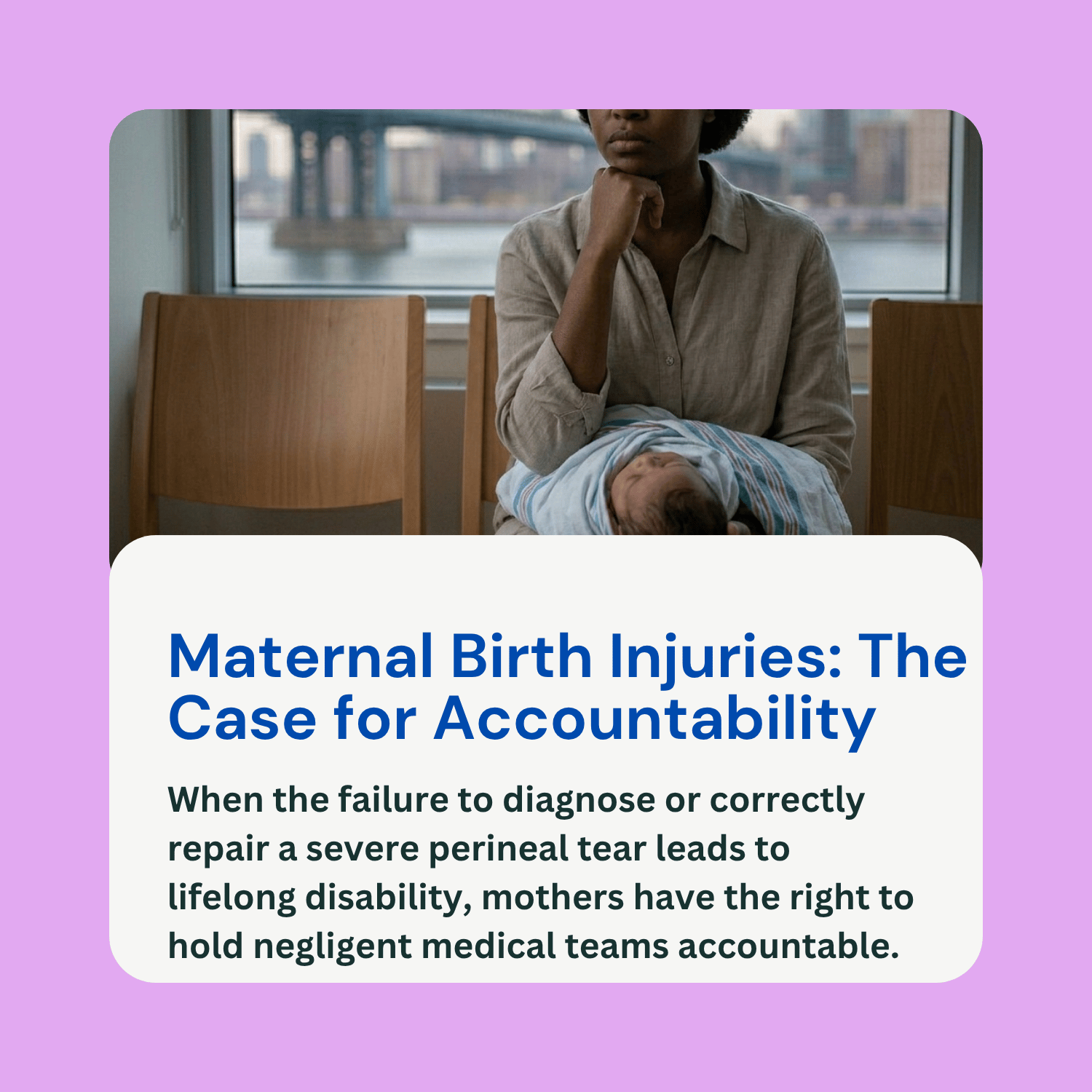
This guide provides an in-depth look at the differences between standard tearing and severe obstetric injuries. We will examine the specific medical errors that lead to these injuries and the long-term physical and emotional impact on the mother. For women in New York who have suffered in silence following a traumatic birth, understanding the legal standard of care is the first step toward seeking justice and the medical resources needed for reconstruction. Accountability in these cases ensures that maternal health is prioritized as much as neonatal outcomes.
Table of Contents
- Understanding the Degrees of Perineal Tearing
- Risk Factors and Preventable Medical Errors
- Symptoms of a Poorly Repaired or Undiagnosed Tear
- The Standard of Care for Repairing Severe Tears
- Long-Term Physical and Emotional Impact
- Seeking Compensation for Maternal Birth Injuries
- Frequently Asked Questions
Understanding the Degrees of Perineal Tearing
To understand when medical malpractice has occurred, it is essential to distinguish between the various levels of perineal trauma. A first-degree tear is minor, involving only the skin of the perineum, while a second-degree tear involves the skin and the underlying muscle tissue. These are common and usually heal well with standard suturing and routine postpartum care. However, once the injury reaches the third or fourth degree, the clinical complexity and the risk of long-term complications increase exponentially.
A third-degree tear involves the perineal skin, the perineal muscles, and the external anal sphincter muscle. This muscle is responsible for bowel control, and any disruption to its integrity can lead to significant functional issues. A fourth-degree tear is the most severe, extending through the anal sphincter and into the lining of the rectum itself. This creates an open communication between the vaginal and rectal canals, which is a high-risk scenario for infection and the development of permanent fistulas.
The standard of care requires a physician to perform a meticulous physical examination immediately following delivery to categorize the tear correctly. This examination must include a digital rectal exam to ensure the sphincter has not been compromised. If a doctor fails to perform this exam or misdiagnoses a fourth-degree tear as a second-degree tear, the repair will be inadequate. This failure to diagnose is a primary foundation for a maternal birth injury malpractice claim.
Risk Factors and Preventable Medical Errors
There are several known risk factors for severe perineal tearing that medical professionals are trained to manage. These include a high birth weight (macrosomia), the baby being in an occiput posterior position, or the mother being a first-time parent. When these risks are present, the doctor must exercise heightened caution during the “crowning” phase of delivery. If a doctor rushes the delivery or fails to support the perineum properly, they increase the likelihood of a high-degree tear occurring.
The use of operative delivery tools is one of the most significant preventable causes of severe tearing. Forceps and vacuum extractors, while sometimes necessary, place immense pressure on the mother’s soft tissues. If a doctor applies these tools before the mother is fully dilated or pulls with excessive force, the perineum is likely to give way. Medical experts often look at the “indications” for using these tools to determine if their use was justified or if a C-section would have been a safer alternative for the mother’s physical integrity.
Another controversial area is the use of episiotomies, which are surgical incisions made to widen the vaginal opening. While once routine, modern medical guidelines suggest that “restrictive” use of episiotomies is much safer for the mother. Specifically, a midline episiotomy is known to carry a higher risk of extending into a fourth-degree tear than a mediolateral incision. If a doctor performs a midline episiotomy without a compelling reason and it results in a severe tear, this may be considered a deviation from the accepted standard of care.
Symptoms of a Poorly Repaired or Undiagnosed Tear
Many women do not realize they have been victims of 3rd and 4th degree tear malpractice until weeks or months after they return home. If a severe tear was missed or repaired with poor technique, the physical symptoms will become increasingly apparent as the initial swelling goes down. One of the most distressing symptoms is fecal urgency or the total inability to control bowel movements. This occurs because the anal sphincter was either not repaired or the sutures did not hold, leaving the muscle unable to close properly.
Incontinence of flatus, or the inability to control gas, is another common sign of sphincter damage. While some minor changes in bowel habits are normal after birth, the involuntary passage of gas or stool is not. Women may also experience a persistent, foul-smelling discharge if a rectovaginal fistula has formed. A fistula is an abnormal tunnel that develops between the rectum and the vagina, allowing stool to leak through the vaginal opening. This is a severe complication that requires complex surgical intervention and is often a direct result of an undiagnosed or poorly treated fourth-degree tear.
Chronic pelvic pain and pain during intercourse (dyspareunia) are also hallmarks of severe birth trauma. If the muscles were not aligned correctly during the repair, the resulting scar tissue can be thick, painful, and inelastic. This can make daily activities difficult and can significantly impact a woman’s intimate relationship and overall quality of life. If you are experiencing these symptoms, it is vital to seek a second opinion from a urogynecologist or a colorectal specialist who focuses on pelvic floor reconstruction.
The Standard of Care for Repairing Severe Tears
When a third or fourth-degree tear occurs, the repair process is a significant surgical procedure that should ideally take place in an operating room rather than a standard delivery room. This environment provides better lighting, appropriate surgical instruments, and access to more effective anesthesia. A successful repair requires the “overlapping” or “end-to-end” technique to reattach the anal sphincter muscles. If a doctor performs a hasty repair in a poorly lit room, the risk of the repair failing is significantly higher.
The medical team must also provide specific “aftercare” instructions and medications to ensure the repair heals correctly. This typically includes the use of stool softeners to prevent straining and a course of antibiotics to reduce the risk of infection at the site of the rectal mucosa. The standard of care also involves a follow-up appointment with a specialist to verify that the sphincter is functioning properly. If these steps are skipped and the mother develops a breakdown of the repair (dehiscence), the hospital may be liable for the resulting damages.
In a malpractice case, legal experts will review the “operative note” written by the doctor after the repair. This note should detail the layers of tissue involved, the type of sutures used, and the specific technique employed to fix the sphincter. If the note is vague or fails to mention a rectal exam, it suggests that the doctor may have rushed the process or missed the full extent of the injury. These details are the “smoking gun” in many maternal birth injury lawsuits.
Long-Term Physical and Emotional Impact
The impact of a severe birth injury is not limited to the physical realm; the emotional toll is often equally devastating. Women who suffer from fecal incontinence or chronic pain often experience a profound sense of shame and isolation. They may be afraid to leave their homes, socialise, or return to work because of the fear of an accident. This can lead to severe depression, anxiety, and a complete loss of confidence during what should be a time of bonding with their new child.
The physical consequences can also affect a woman’s future reproductive choices. Many women who have suffered a fourth-degree tear are advised to have C-sections for all future deliveries to avoid further damage to the anal sphincter. This represents a loss of the “normal” birthing experience and can be a source of significant grief. The cost of these future C-sections, as well as the cost of pelvic floor physical therapy and potential reconstructive surgeries, are all recoverable damages in a legal claim.
Furthermore, the chronic pain associated with a poorly repaired tear can make it difficult for a mother to care for her baby. Lifting a growing infant or pushing a stroller can be agonizing for a woman with a compromised pelvic floor. When a medical mistake robs a mother of her ability to enjoy and participate in her child’s early years, the law recognizes this as a substantial loss. Seeking compensation is a way to ensure the mother has the financial support to hire help and access the best medical treatments available.
Seeking Compensation for Maternal Birth Injuries
In New York, a mother has the legal right to file her own medical malpractice claim independent of any claim involving the baby. Compensation for 3rd and 4th degree tear malpractice can cover a wide range of economic and non-economic losses. Economic damages include the cost of past and future medical treatments, such as colorectal surgery, urogynecology visits, and specialized physical therapy. It also includes lost wages if the injury prevents the mother from returning to her career.
Non-economic damages cover the “pain and suffering” the mother has endured. This includes the physical pain of the injury and the subsequent surgeries, as well as the emotional distress caused by incontinence and the impact on her marriage. In New York, there is no cap on the amount of money a jury can award for these non-economic damages. This allows for a recovery that truly reflects the life-altering nature of a severe maternal birth injury.
To build a strong case, your attorney will work with medical experts who can explain exactly how the doctor failed you. This might involve an expert in obstetrics to discuss the delivery and an expert in colorectal surgery to discuss the failed repair. These specialists will provide a detailed report that serves as the foundation of your lawsuit. By holding the medical team accountable, you are not only securing your own future but also encouraging safer practices in the delivery room for all women.
Frequently Asked Questions
1. Is a 3rd or 4th degree tear always a sign of malpractice?
No, these tears are not always caused by negligence. They can occur naturally in high-risk deliveries even when the doctor does everything correctly. However, if the tear was caused by the misuse of forceps, an unnecessary episiotomy, or if the doctor failed to diagnose and repair the tear properly, it likely constitutes medical malpractice.
2. Can I sue if my tear was diagnosed but the repair failed?
Yes. If the repair failed because the doctor used improper surgical techniques or failed to provide necessary postoperative instructions, you may have a claim. A failed repair (dehiscence) often indicates that the original surgery was not performed according to the required medical standards.
3. What is the statute of limitations for maternal birth injuries in New York?
In New York, you generally have two years and six months from the date of the injury to file a medical malpractice lawsuit. This is different from the child’s timeline, which can be extended. It is critical to speak with an attorney as soon as you realize you have long-term complications to ensure you do not miss this deadline.
4. How do I prove that my doctor missed a 4th-degree tear?
Proof often comes from your subsequent medical records. If you visited a different doctor weeks later and they diagnosed a fistula or a sphincter gap that was not mentioned in your delivery records, this is strong evidence that the original doctor missed the injury during their initial exam.
5. What kind of doctor should I see for a severe birth injury?
You should seek a consultation with a urogynecologist or a colorectal surgeon who specializes in “pelvic floor reconstruction.” These specialists have the advanced training necessary to evaluate anal sphincter function and repair complex injuries like rectovaginal fistulas.
6. Can I recover money for the emotional trauma of the injury?
Yes. The law allows you to seek damages for the emotional distress and the loss of enjoyment of life caused by the injury. This includes the embarrassment of incontinence and the strain the injury has placed on your personal and social life.
7. Will I have to go through another surgery to fix the damage?
In many cases of severe tearing malpractice, a secondary “sphincteroplasty” or reconstructive surgery is required to restore function. Part of your legal claim will be seeking the funds to pay for these expensive and specialized procedures, as well as the recovery time associated with them.
Reclaiming Your Life After Birth Trauma
If you have suffered a severe birth injury, it is important to remember that you are not alone and that your physical health matters. For too long, women have been told that these injuries are “just part of being a mother,” but that is simply not true. You deserve to live without pain and without the fear of incontinence. Reaching out for specialized medical care is the first step toward physical recovery, and reaching out for legal help is the first step toward justice.
A birth injury lawyer who specializes in maternal trauma can help you uncover the truth about your delivery. They can provide a supportive environment where you can discuss your symptoms without judgment and help you understand your legal options. By pursuing a claim, you are advocating for yourself and for your family’s future. You are also sending a clear message that maternal injuries must be taken seriously by the medical community.
Do not let the complexity of the legal system or the sensitive nature of your injuries stop you from seeking help. Your quality of life is worth fighting for, and there are professionals dedicated to helping women in your exact situation. Whether you need a referral to a specialist or an evaluation of your medical records, the support you need is available. Your journey toward healing and accountability starts with the courage to speak up about your experience.