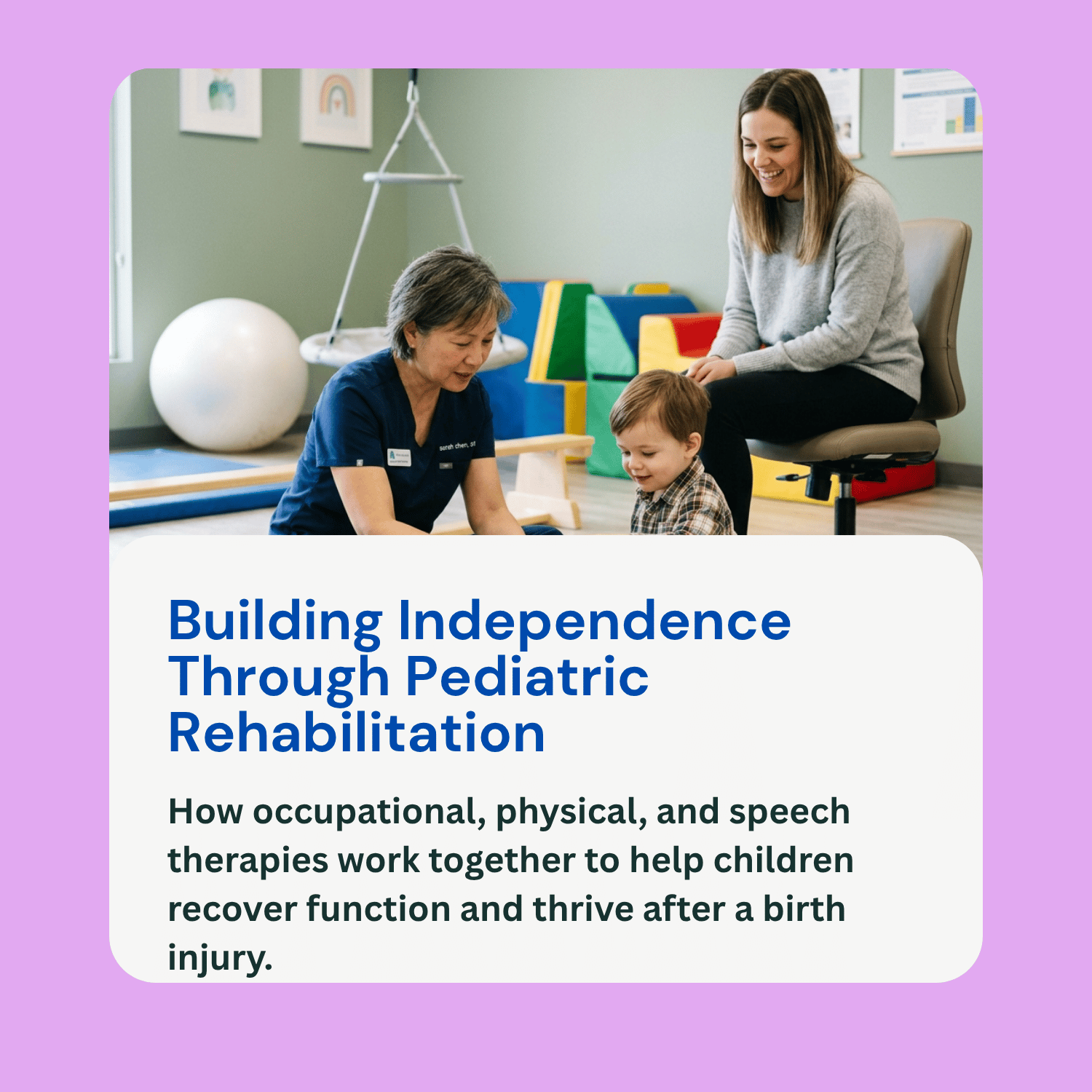

Understanding Birth Injury Rehabilitation
A birth injury diagnosis can feel overwhelming for parents facing an uncertain future. Whether a child has suffered from Hypoxic-Ischemic Encephalopathy (HIE), cerebral palsy, brachial plexus injuries, or severe developmental delays, navigating medical care becomes a top priority. While initial hospital treatments focus on stabilizing an infant’s vital health, long-term recovery and independence depend on comprehensive birth injury rehabilitation.
Pediatric rehabilitation is not a single treatment; it is a holistic, multidisciplinary approach tailored to help a child build essential motor, cognitive, and communication skills. Early intervention takes advantage of neuroplasticity—the young brain’s remarkable ability to adapt, reorganize, and build new neural pathways. This guide breaks down the primary pillars of birth injury rehabilitation, including physical, occupational, and speech therapy, along with long-term care strategies for families.
The Three Core Pillars of Pediatric Rehabilitation
A comprehensive rehabilitation program brings together specialized pediatric therapists who focus on distinct areas of a child’s development:
1. Pediatric Physical Therapy (PT)
Physical therapy focuses on gross motor skills, physical strength, alignment, and mobility. For children affected by brain or nerve injuries, PT helps manage abnormal muscle tone (hypertonia or hypotonia), improve balance, and encourage natural movement patterns.
- Targeted Exercises: Therapists use active stretching and strengthening routines to prevent muscle contractures (permanent shortening of muscles) and joint stiffness.
- Mobility Training: Children practice rolling, sitting, crawling, and walking. Physical therapists also fit children for assistive devices such as leg braces (AFOs), walkers, or wheelchairs.
- Aquatic and Hippotherapy: Water therapy and equine-assisted movement therapy are often used to reduce joint impact and stimulate muscle coordination in a supportive environment.
2. Pediatric Occupational Therapy (OT)
While physical therapy focuses on big movements, occupational therapy targets fine motor skills, sensory processing, and daily independence. OT helps children develop the functional abilities needed to interact with their environment and perform age-appropriate activities.
- Fine Motor Coordination: OT helps children build finger and hand strength to grasp toys, hold eating utensils, button clothing, and write.
- Sensory Integration: Children with birth injuries often experience sensory processing challenges. Occupational therapists use textured play, gentle movement, and controlled environments to help children process touch, sound, and spatial awareness.
- Adaptive Equipment Training: Occupational therapists help select and train children on specialized tools, such as weighted eating utensils, modified seating, and adaptive dressing aids.
3. Pediatric Speech and Language Therapy (SLP)
Birth injuries that affect the brain’s motor centers often impact the facial muscles, tongue, and throat. Speech-language pathologists work on both communication abilities and critical oral-motor functions.
- Feeding and Swallowing (Dysphagia): Many infants with neurological injuries struggle to swallow safely. Speech therapists assess swallowing mechanics to prevent choking and liquid aspiration into the lungs.
- Speech Mechanics: Therapists help children strengthen facial muscles to improve articulation, sound production, and vocal control.
- Augmentative and Alternative Communication (AAC): For non-verbal children or those with severe speech delays, SLPs introduce alternative communication tools, ranging from picture exchange communication boards to eye-gaze speech-generating devices.
Creating a Long-Term Care and Rehabilitation Plan
Rehabilitation for a significant birth injury is a long-term journey that evolves as a child grows from infancy through adolescence. Building a sustainable care structure involves several key components:
Early Intervention Services: State-sponsored early intervention programs provide home- or center-based therapies for infants and toddlers under age 3. Initiating these therapies as early as possible yields the best long-term outcomes.
At-Home Therapy Routines: Successful rehabilitation relies heavily on parents and caregivers integrating therapeutic exercises into daily life. Therapists train family members on gentle stretching, positioning techniques, and play-based exercises to maintain progress between formal clinical sessions.
Medical and Surgical Support: Physical rehabilitation frequently coordinates with specialized medical treatments. Pediatric neurologists and physiatrists may recommend medications (such as muscle relaxants or Botox injections) to manage spasticity, or advise orthopedic surgeries to lengthen tight tendons or align hip joints.
Assistive Technology and Home Modifications: Long-term planning includes adapting living spaces to support a child’s mobility. Wheelchair ramps, widened doorways, roll-in showers, and sensory-friendly play areas ensure that home remains a safe and accessible environment.
Frequently Asked Questions (FAQ)
How soon after birth should rehabilitation therapy begin?
Rehabilitation usually begins as soon as the infant is medically stable. Many babies start passive range-of-motion exercises and feeding therapy while still in the NICU. Formal outpatient or early intervention therapies typically start within the first few weeks or months of returning home.
Can birth injury rehabilitation cure cerebral palsy or brain damage?
While rehabilitation cannot repair damaged brain tissue, it enables the healthy areas of the brain to compensate for damaged zones through neuroplasticity. Therapy helps children maximize their physical and cognitive potential, prevent secondary complications like joint deformities, and achieve the highest possible level of independence.
What role does an Individualized Education Program (IEP) play in rehabilitation?
When a child turns 3, early intervention services typically transition to public school district programs. An IEP outlines the specialized accommodations, physical therapy, occupational therapy, and speech therapy services the child will receive within the educational setting to support learning and social development.
How do families cover the long-term costs of birth injury rehabilitation?
Long-term therapy and adaptive equipment can be expensive. Families often rely on health insurance, state Medicaid programs, legal settlements from birth injury lawsuits (when injuries were caused by medical negligence), and local non-profit grants to cover therapy costs and equipment expenses.