
Brachial Plexus Injury Birth Malpractice: A Long-Term Guide
The brachial plexus is a sophisticated network of nerves that originates in the spinal cord and extends through the neck into the shoulder, arm, and hand. These nerves are responsible for transmitting the electrical signals that allow for muscle movement and skin sensation in the upper extremities. During a difficult delivery, these delicate structures are highly vulnerable to stretching, tearing, or being pulled away from the spinal column entirely. A brachial plexus injury birth malpractice case typically arises when a medical professional uses excessive manual traction or mechanical force during a delivery that has become physically obstructed. While some nerve stretches heal naturally, more severe injuries can leave a child with a permanent disability that affects their ability to perform basic daily tasks for the rest of their life.
Table of Contents
- The Anatomy of the Brachial Plexus Nerves
- Clinical Grades of Injury: From Stretch to Avulsion
- Erb’s Palsy vs. Klumpke’s Palsy
- Horner’s Syndrome and Severe Nerve Involvement
- Surgical Interventions and Nerve Grafting
- Long-Term Occupational and Physical Therapy
- The New York 10-Year Statute of Limitations
- Frequently Asked Questions
The Anatomy of the Brachial Plexus Nerves
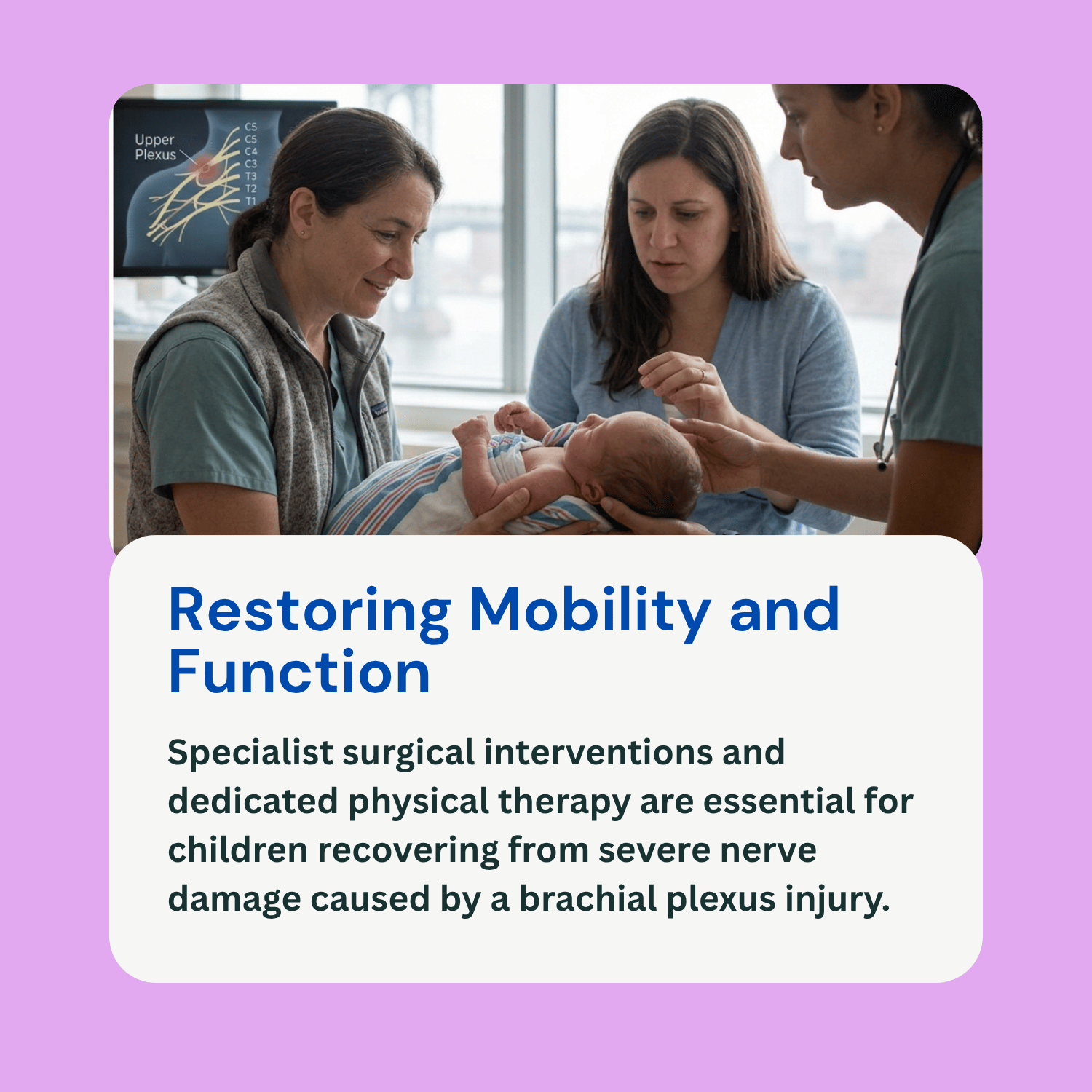
To understand the gravity of a birth injury, it is helpful to visualize the brachial plexus as a complex electrical circuit board. The network is formed by the ventral rami of the lower four cervical nerves (C5, C6, C7, and C8) and the first thoracic nerve (T1). These five nerve roots combine and branch out into trunks, divisions, and cords before finally becoming the peripheral nerves that control the bicep, triceps, and hand muscles. Because these nerves are situated in a narrow space between the neck and the shoulder, any forceful pulling of the baby’s head in one direction while the shoulder is stuck in another creates a massive “tension event.”
In a normal delivery, the baby’s body follows the head without resistance, keeping the nerves in a relaxed state. However, during a traumatic delivery, the distance between the neck and the shoulder is artificially elongated. This elongation puts the C5 through T1 nerve roots under extreme stress, often causing them to snap like a rubber band that has been pulled too far. The specific nerves that are damaged determine which parts of the arm will be paralyzed and whether the child will ever regain full use of their hand.
Medical malpractice lawyers work with neurologists to map out the exact location of the lesion. By observing which muscles are “denervated” (lacking electrical input), experts can pinpoint the exact moment in the delivery where the doctor applied the most pressure. This anatomical evidence is often more reliable than the hospital’s written records, as the physical state of the baby’s nerves provides an undeniable record of the force used. Understanding this anatomy is the first step in building a case that holds the medical team accountable for their physical actions.
Clinical Grades of Injury: From Stretch to Avulsion
Not all brachial plexus injuries are created equal, and medical professionals categorize them into four distinct grades based on the severity of the damage. The mildest form is known as “neurapraxia,” which occurs when the nerve is stretched but not torn. In these cases, the “insulation” or myelin sheath of the nerve is damaged, temporarily slowing down the electrical signals. Most babies with neurapraxia will recover full function within three to four months as the sheath heals, and these cases rarely result in long-term litigation unless there are other complications.
The second grade is a “neuroma,” which happens when the nerve is stretched so far that some of the internal fibers tear. As the nerve attempts to heal itself, scar tissue forms at the site of the injury. This scar tissue acts as a “blockage,” preventing signals from reaching the muscles effectively. While some function may return, the arm often remains weak, and the child may experience painful tingling or “shocks” in the limb. These injuries often require specialized physical therapy to manage the inelastic scar tissue.
The most severe grades are “ruptures” and “avulsions.” A rupture occurs when the nerve is completely torn apart but the tear is located outside of the spinal cord. An avulsion is the most catastrophic, occurring when the nerve root is literally pulled out of the spinal cord itself. An avulsed nerve cannot be repaired through simple suturing and often requires complex “nerve transfers” from other parts of the body. When a child is born with an avulsion, it is almost always the result of extreme, inappropriate force used by the obstetrician.
Erb’s Palsy vs. Klumpke’s Palsy
The two most common clinical presentations of a brachial plexus injury are Erb’s Palsy and Klumpke’s Palsy, which are named after the physicians who first described them. Erb’s Palsy, also known as “Upper Plexus Palsy,” involves damage to the C5 and C6 nerve roots. This is the most common type of injury and affects the shoulder and the bicep. A child with Erb’s Palsy will have a “waiter’s tip” arm, where the arm hangs straight and is rotated inward, but they may still be able to move their fingers.
Klumpke’s Palsy is significantly rarer in newborns and involves the lower nerve roots, C8 and T1. This injury specifically affects the small muscles of the hand and the wrist. A child with Klumpke’s Palsy will often have a “claw hand” appearance, where the fingers are permanently curled and the wrist lacks strength. This type of injury is particularly devastating because it robs the child of fine motor skills, making it difficult to write, type, or use tools as they grow older.
In many cases of brachial plexus injury birth malpractice, the child suffers from “Total Plexus Palsy,” which means all five nerve roots from C5 to T1 were damaged. This results in a completely flail arm with no movement or sensation from the shoulder to the fingertips. Total palsy cases are the most likely to lead to significant legal settlements, as they require the most intensive medical intervention and result in the highest degree of lifetime disability. Determining the specific “palsy” diagnosis is a critical part of the initial pediatric evaluation.
Horner’s Syndrome and Severe Nerve Involvement
In the most severe cases of birth-related nerve damage, a child may also present with a condition called Horner’s Syndrome. This occurs when the sympathetic nerve fibers, which run near the T1 nerve root, are damaged. The symptoms of Horner’s Syndrome are highly visible and include a drooping eyelid (ptosis), a smaller pupil (miosis), and a lack of sweating on one side of the face. If a newborn displays these symptoms alongside an immobile arm, it is a clinical “red flag” for a severe nerve avulsion.
Horner’s Syndrome is more than just a cosmetic issue; it indicates that the force used during delivery was so great that it affected the nerves responsible for involuntary body functions. Because the T1 root is located so deep within the neck, damaging it requires a level of traction that far exceeds any standard of care. Medical experts often use the presence of Horner’s Syndrome to prove that the doctor was not just being “firm,” but was acting with reckless disregard for the baby’s safety.
Families of children with Horner’s Syndrome often face additional challenges, as the eye and eyelid issues may require their own set of surgeries. Furthermore, the presence of this syndrome often indicates that the brachial plexus injury is permanent and will not heal on its own. For a New York birth injury lawyer, this diagnosis is a key piece of evidence that the trauma was high-impact and undoubtedly caused by external mechanical force rather than the “natural forces of labor.”
Surgical Interventions and Nerve Grafting
When a brachial plexus injury does not show signs of improvement within the first few months, surgery becomes a necessary consideration. The goal of these surgeries is to restore some level of movement and sensation to the paralyzed limb. One common procedure is a “nerve graft,” where a healthy nerve is taken from another part of the baby’s body (usually the leg) and used to “bridge” the gap between the two ends of a ruptured nerve. This allows the electrical signals to eventually bypass the damaged area as the nerve fibers grow through the graft.
If the nerve has been avulsed from the spinal cord, a graft is not enough, and a “nerve transfer” (neurotization) may be required. In this procedure, a functioning nerve that controls a less critical muscle is redirected to the muscle that has been paralyzed. For example, a doctor might take part of a nerve that controls the diaphragm or the ribs and connect it to the bicep muscle. While this can restore some basic movement, it is a long and difficult process that requires the child’s brain to “relearn” how to move the arm using a different nerve pathway.
These surgeries are highly specialized and are usually performed by a team of plastic surgeons and neurosurgeons at major pediatric centers. In New York, facilities like the Hospital for Special Surgery or NYU Langone are often where these complex reconstructions take place. The cost of these procedures, the hospital stays, and the subsequent “re-training” of the muscles are all damages that can be recovered in a malpractice lawsuit. Because these surgeries often need to be repeated as the child grows, the legal claim must account for a lifetime of surgical care.
Long-Term Occupational and Physical Therapy
Surgery is only one part of the journey for a child with a brachial plexus injury; the “real work” often happens in therapy. Physical therapy (PT) begins almost immediately after birth to prevent “contractures,” which occur when the muscles and joints become permanently stiff from lack of use. The therapist will perform range-of-motion exercises to keep the shoulder, elbow, and wrist flexible. Without this consistent intervention, the child’s arm can become stuck in a bent or twisted position that is painful and impossible to correct later.
Occupational therapy (OT) becomes more important as the child enters toddlerhood and school age. OT focuses on “functional” tasks, such as teaching the child how to eat, dress themselves, and play using one hand or with limited movement in the affected arm. Therapists also work on “bimanual coordination,” helping the child find ways to use their injured arm as a “helper” to their healthy arm. This therapy is essential for building the child’s independence and confidence as they navigate a world that is designed for two-handed people.
The financial cost of these therapies is one of the biggest burdens for families. A child with a severe injury may require therapy two or three times a week for many years. Many insurance plans have strict limits on the number of therapy sessions they will cover, leaving parents to pay thousands of dollars out of pocket. A successful brachial plexus injury birth malpractice settlement ensures that the child never has to go without therapy because of a lack of funds. This consistent care is the difference between a child who is isolated by their disability and one who learns to thrive despite it.
The New York 10-Year Statute of Limitations
One of the most important things for New York families to understand is the timeline for filing a lawsuit. While the general statute of limitations for medical malpractice in New York is two years and six months, there is a significant “infancy toll” for injuries to children. Under Civil Practice Law & Rules Section 208, the deadline for a child’s birth injury claim can be extended up to a maximum of 10 years from the date of the injury. This means you have until the child’s 10th birthday to commence a lawsuit for their permanent nerve damage.
This extended timeline is crucial because it often takes several years to determine if a brachial plexus injury is truly permanent. A child may undergo surgeries at age three or four, and the results of those surgeries might not be clear until they are six or seven. By allowing up to 10 years, the law ensures that families can assess the full extent of the “damages”—including the child’s school performance and long-term physical limitations—before settling their case. However, waiting until the last minute is never advisable, as evidence can be lost and witnesses can move away.
It is also vital to remember that if the birth occurred at a public hospital, such as those in the NYC Health + Hospitals system, the 90-day Notice of Claim rule still applies. Even though the child has 10 years to sue, the parents must notify the city of the intent to sue within three months of the birth. This “procedural trap” has ended many valid cases before they even started. If your child was born at a facility like Bellevue, Elmhurst, or Kings County, you must speak with an attorney immediately to protect your rights.
Frequently Asked Questions
1. Can a brachial plexus injury happen during a C-section?
While it is extremely rare, it is possible. If the surgeon makes an incision that is too small and has to use excessive force to pull the baby through the opening, a nerve injury can occur. However, the vast majority of these injuries happen during vaginal deliveries where the baby’s shoulder becomes stuck behind the pelvic bone (shoulder dystocia).
2. Is there a difference between Erb’s Palsy and a brachial plexus injury?
Erb’s Palsy is a type of brachial plexus injury. It specifically refers to damage to the upper nerves (C5 and C6). While the terms are often used interchangeably in casual conversation, “brachial plexus injury” is the broader medical category that includes Erb’s, Klumpke’s, and total paralysis.
3. How do doctors test for nerve damage in a newborn?
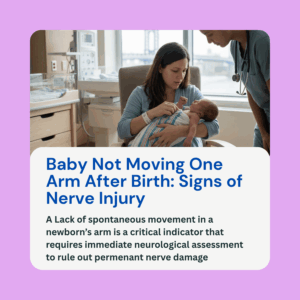
Doctors use several methods, starting with a physical exam to check for the “Moro reflex” (the startle response). If the baby only lifts one arm when startled, it suggests nerve damage. Later, they may use an Electromyogram (EMG) to measure the electrical activity in the muscles or an MRI to look for nerve ruptures or avulsions in the neck.
4. What if the doctor says the injury happened “in the womb”?
This is a common defense tactic used by hospitals to avoid liability. They may claim that “intrauterine pressure” caused the injury before labor even began. However, there is very little scientific evidence to support this theory for severe injuries like ruptures or avulsions, which almost always require the external mechanical force found in a difficult delivery.
5. Will my child ever have a “normal” arm?
The outlook depends entirely on the severity of the initial injury. Children with minor stretches often regain 100 percent function. Those with ruptures or avulsions may never have full strength or fine motor control, but with surgery and therapy, they can often gain enough function to lead a very independent and successful life.
6. Can I sue for my own emotional distress as a parent?
In New York, it is difficult for parents to recover for their own emotional distress unless they were also physically injured during the delivery (the “zone of danger” rule). However, the child’s claim can include the cost of the parents’ lost wages if they had to quit their job to provide the constant care and therapy the child requires
7. How much is a brachial plexus injury case worth?
The value depends on the child’s level of disability and the cost of their future care. In New York, settlements and verdicts for permanent brachial plexus injuries often range from several hundred thousand dollars to several million dollars. A comprehensive “life care plan” created by experts will determine the specific financial needs of your child.
A Lifetime of Support and Justice
Raising a child with a brachial plexus injury requires a level of patience, dedication, and resilience that most parents never expect to need. From the first weeks of physical therapy to the difficult decisions about surgery, your focus is entirely on your child’s well-being. It is important to know that you do not have to carry the financial and legal burdens of this journey alone. Seeking accountability is not just about the past; it is about ensuring your child has the brightest possible future.
A dedicated New York birth injury attorney can be your greatest ally in this process. They can take over the investigation of the medical records, deal with the insurance companies, and build a case that reflects the true impact of the injury on your child’s life. This allows you to go back to being a parent and focusing on your child’s daily progress and milestones. Justice is the tool that provides the therapy, the surgeries, and the peace of mind your family deserves.
If you have questions about your delivery or your child’s diagnosis, do not hesitate to reach out for a professional evaluation. Every child deserves a chance to reach their full potential, and if a medical mistake took that away, the law provides a way to make things right. Your child’s arm may be injured, but their future does not have to be. Taking action today is the first step toward a lifetime of support and a more secure tomorrow for your entire family.