
What Parents Should Know About Fetal Heart Rate Monitoring
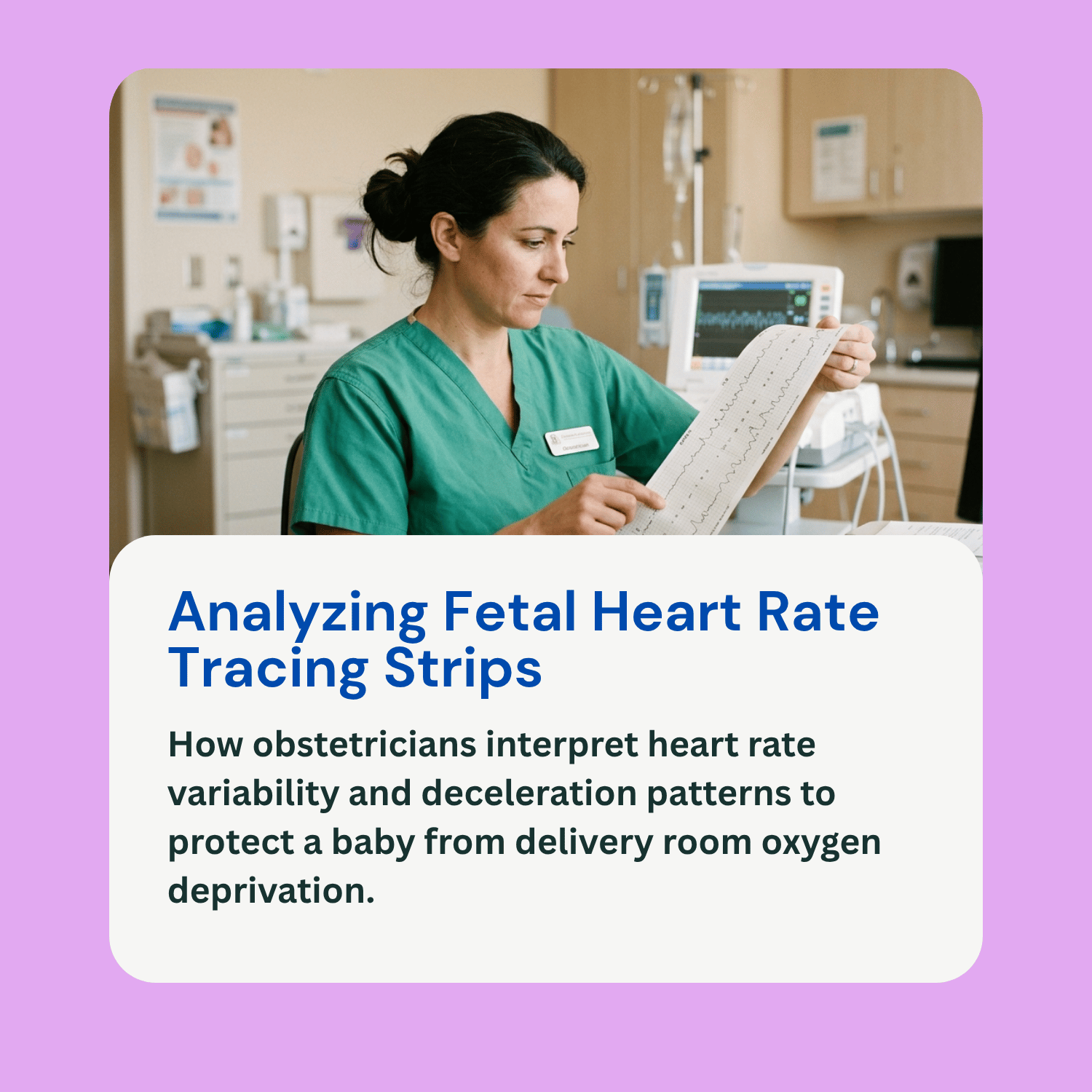
When you enter the labor and delivery room, one of the first pieces of medical equipment you will see set up next to your bed is the fetal monitor. For many parents, the steady, rhythmic ticking sound of their baby’s heartbeat becomes a comforting background track to the labor process. This continuous clinical assessment, known as fetal heart rate monitoring, is the primary tool that obstetricians and labor nurses use to evaluate how well your baby is tolerating the intense stress of uterine contractions.
While the sound of the heartbeat provides peace of mind, watching the complex squiggly lines on the digital screen can also cause sudden anxiety. What do the sudden dips mean? What are the doctors looking for? Understanding how this technology works, how to interpret normal versus abnormal readings, and when an irregular pattern requires immediate medical intervention helps parents feel empowered and informed during childbirth. This educational guide breaks down the science of fetal tracking and outlines exactly what standard safeguards keep your newborn safe.
How Fetal Heart Rate Monitoring Works: Continuous vs. Intermittent
Medical teams track your baby’s cardiac activity during labor using one of two primary approaches, depending on your risk factors and how your labor is progressing:
External Fetal Monitoring
This is the most common method. Two elastic bands holding round, plastic discs called transducers are placed around your abdomen.
- One transducer uses ultrasound technology to track the baby’s heart rate.
- The other transducer, called a tocodynamometer (toco), measures the frequency and duration of your contractions.
Together, they display a simultaneous picture of how the baby’s heart reacts to the physical squeezing of each contraction.
Internal Fetal Monitoring
If the external sensors cannot get a clear reading because the mother is moving frequently or the baby is shifting, the doctor may switch to internal monitoring. A thin, sterile wire called a fetal scalp electrode (FSE) is passed through the cervix and attached directly to the skin of the baby’s scalp. This provides an incredibly accurate, second-by-second reading of the baby’s heart electrical activity. This method can only be used if your cervix is partially dilated and your amniotic sac has already ruptured.
Decoding the Monitor: Baseline, Variability, and Changes
To evaluate the reading, doctors and nurses look at three major components on the monitoring screen:
- The Baseline Rate: A normal, healthy fetal heart rate baseline sits between 110 and 160 beats per minute (bpm). This is significantly faster than an adult’s heart rate. A baseline that stays above 160 bpm is called tachycardia (often caused by a maternal infection or fever), while a baseline that drops below 110 bpm is bradycardia.
- Variability (The Most Important Metric): Healthy fetal heart lines should look jagged and bumpy, not smooth and flat. This microscopic fluctuation in the heart rate is called variability. It shows that the baby’s central nervous system is intact and actively adjusting to their surroundings. A flat, smooth line with “absent or minimal variability” is a major warning sign that the baby may be running low on oxygen or is suffering from neurological depression.
- Accelerations and Decelerations: Accelerations are brief, temporary spikes in the heart rate that happen when the baby moves; these are highly reassuring indicators of a well-oxygenated infant. Decelerations are drops in the heart rate. Depending on when they happen in relation to a contraction, they can be harmless or dangerous.
When Abnormal Readings Require Immediate Intervention
Not every dip on a fetal heart monitor means there is an emergency. However, specific abnormal patterns indicate the baby is entering a dangerous state of fetal distress and require the medical team to intervene immediately:
1. Late Decelerations
A late deceleration occurs when the baby’s heart rate drops after the peak of your contraction and takes a long time to return to its baseline. This pattern almost always means the placenta is failing to deliver enough blood and oxygen to the baby during the height of uterine pressure (uteroplacental insufficiency). Repetitive late decelerations are a critical warning sign.
2. Deep, Repetitive Variable Decelerations
These appear on the monitor as sharp, jagged drops that look like the letters “V” or “W.” They happen when the umbilical cord is being pinched or squeezed, temporarily cutting off the baby’s lifeline. If these drops become deeper and last longer over time, the baby’s oxygen reserves will quickly run out.
3. Prolonged Decelerations
This occurs when the fetal heart rate drops sharply and stays down for more than two minutes without recovering. This is an acute medical emergency frequently caused by severe complications like a ruptured uterus, placental abruption, or an umbilical cord prolapse.
The Clinical Consequences of Ignoring Fetal Distress
When fetal heart rate monitoring tracks these severe, non-reassuring patterns, the medical team is expected to execute “in-utero resuscitation” steps immediately. These steps include turning the mother onto her left side to improve blood flow, administering intravenous fluids, giving supplemental oxygen, or pausing contraction-inducing medications like Pitocin.
If these conservative measures fail to stabilize the baby’s heart rate within a few minutes, the standard of medical care requires the team to perform an immediate emergency C-section.
If a doctor or labor nurse ignores the monitor’s alarms, fails to read the tracing strips accurately, or delays an emergency delivery, the baby can suffer from prolonged birth asphyxia (severe oxygen deprivation). This oxygen debt can cause permanent cell destruction in the brain, resulting in Hypoxic-Ischemic Encephalopathy (HIE), permanent learning disabilities, or motor control disorders like cerebral palsy (CP).
Frequently Asked Questions (FAQ)
Does an abnormal fetal heart rate always mean my baby is in danger?
No. A temporary dip can happen if the baby shifts position or hits a brief contraction hurdle. Doctors look at the entire trend of the monitor strip rather than an isolated incident. If the baby’s heart rate rebounds quickly and retains good variability, it generally indicates that they are compensating well and are safe.
What is the difference between a category 1, 2, and 3 fetal heart monitor reading?
The medical community uses a three-tier system to classify tracking strips:
- Category 1: Normal, reassuring, and safe. No action is needed.
- Category 2: Indeterminate. The reading is not explicitly dangerous but requires close monitoring and corrective adjustments.
- Category 3: Severely abnormal. This indicates a high probability of progressive fetal oxygen deprivation and requires immediate delivery.
Can a hospital be held responsible if they misread a fetal heart monitor strip?
Yes. Because continuous fetal heart rate monitoring provides a permanent paper and digital record of the entire labor, any delays or errors in interpreting the lines are highly visible. If a medical professional fails to act on a Category 3 strip and a baby is born with a preventable brain injury, it constitutes clear medical negligence.
Can I ask to be disconnected from the fetal monitors during labor?
If you have a low-risk pregnancy, you may be a candidate for intermittent monitoring, where nurses check the heartbeat every 15 to 30 minutes using a handheld Doppler device, allowing you to walk around. However, if your labor is induced with Pitocin, if you receive an epidural, or if any high-risk complications are present, continuous electronic monitoring is required to ensure your baby’s safety.