
What Is Birth Asphyxia?
The process of bringing a baby into the world requires a delicate balance of timing, oxygenation, and medical vigilance. During labor and delivery, the fetus relies entirely on the mother’s blood flow through the placenta and umbilical cord to receive oxygen. If this blood flow is interrupted or significantly diminished, the baby faces a critical medical emergency known as birth asphyxia.
Also widely referred to as perinatal asphyxia, this condition occurs when an infant suffers severe oxygen deprivation immediately before, during, or right after birth. When oxygen levels plummet, the baby’s metabolic system begins to falter, causing carbon dioxide and dangerous acids to build up in the bloodstream. If medical teams do not identify and address the situation immediately, the resulting cellular debt can lead to tissue damage in vital organs—most notably the developing brain. This educational guide breaks down how birth asphyxia occurs, how medical teams diagnose it, the emergency therapies used to limit brain injury, and what long-term outcomes look like for affected children.
Understanding the Primary Causes of Birth Asphyxia
Oxygen deprivation during labor can stem from acute complications involving the placenta, the umbilical cord, or the mother’s systemic physiological state. Umbilical cord accidents are among the most frequent clinical causes. A nuchal cord wrapped tightly around the baby’s neck, a true knot in the cord, or a prolapsed cord—where the umbilical cord drops into the birth canal ahead of the baby and gets compressed against the pelvic bone—can severely restrict or completely cut off oxygenated blood flow.
Placental crises represent another major cause. If a mother experiences a placental abruption, the placenta detaches from the uterine wall prematurely, severing the infant’s oxygen lifeline. Similarly, placental insufficiency or uterine rupture creates an immediate delivery room emergency. Extended or obstructed labor also places immense physical stress on a baby. Hyper-stimulated contractions, often triggered by inappropriate dosages of labor-inducing drugs like Pitocin, can prevent the placenta from refilling with fresh blood between contractions, gradually exhausting the baby’s oxygen reserves. Finally, severe maternal medical events—such as preeclampsia, eclampsia, acute low blood pressure, or infection—directly impact oxygen transfer to the fetus.
Diagnostic Markers in the Delivery Room
In the chaotic moments following a complicated delivery, medical professionals rely on specific objective diagnostic markers to identify birth asphyxia and gauge its severity. One of the earliest physical indicators is a consistently low APGAR score. Evaluated at one and five minutes after birth, scores between 0 and 3 reflect a baby who is pale, limp, unresponsive, and struggling to breathe independently.
To establish a definitive chemical diagnosis, clinicians draw blood directly from the umbilical cord vessels immediately after delivery. An arterial cord blood pH reading below 7.0, combined with a base deficit greater than 12 mmol/L, confirms that the infant’s tissues went into a severe state of metabolic acidosis due to missing oxygen.
Beyond blood chemistry, doctors evaluate the infant for physical signs of acute neurological distress, such as profound hypotonia (a weak, “floppy” body tone), absent sucking or swallowing reflexes, lethargy, or early neonatal seizures occurring within the first 24 hours of life. Over the subsequent days, evidence of multisystem organ damage—including acute kidney failure, heart rhythm abnormalities, or elevated liver enzymes—further confirms the systemic impact of the asphyxia event.
Emergency Treatments and Medical Interventions
Managing birth asphyxia begins with rapid delivery room stabilization. The resuscitation team must clear the infant’s airway, administer positive pressure ventilation or endotracheal intubation, and ensure blood pressure and blood sugar remain strictly balanced to supply the brain with essential nutrients.
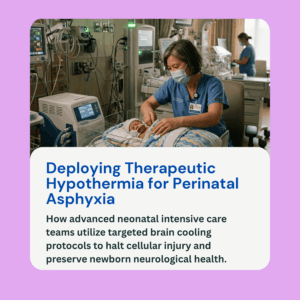
Once the infant is stabilized, the primary treatment for moderate-to-severe asphyxia is therapeutic hypothermia (brain cooling). Initiated within the critical first 6 hours of life, this therapy involves placing the infant on a temperature-controlled cooling blanket that gently lowers their core body temperature to approximately 33.5°C (92.3°F) for 72 hours. By slowing down the brain’s metabolic demand, cooling halts the secondary wave of chemical destruction—such as free radical release and cellular inflammation—that typically happens when oxygen returns to vulnerable brain tissue.
Long-Term Outcomes and Related Birth Injuries
The long-term prognosis for an infant who suffers birth asphyxia depends almost entirely on the depth and duration of the oxygen debt. Mild cases that receive prompt resuscitation often resolve with complete recovery and no lingering physical or cognitive deficits. However, prolonged oxygen deprivation can result in permanent neurological conditions.
The primary brain injury caused by oxygen loss is Hypoxic-Ischemic Encephalopathy (HIE), which serves as the foundation for several chronic childhood disabilities. When asphyxia damages the motor centers of the brain, the child may develop cerebral palsy (CP), leading to lifelong challenges with movement, muscle stiffness, and coordination. Additionally, scar tissue in the brain can trigger epilepsy or chronic seizure disorders. As the child reaches school age, cognitive, behavioral, or speech delays may become apparent, requiring early intervention therapies to maximize functional independence.
Frequently Asked Questions (FAQ)
Is birth asphyxia the same as Hypoxic-Ischemic Encephalopathy (HIE)?
They are closely linked, but not identical. Birth asphyxia is the overarching event—the state of severe oxygen deprivation surrounding birth. Hypoxic-Ischemic Encephalopathy (HIE) is the specific neurological condition or brain injury that develops as a direct result of that severe asphyxia.
Can birth asphyxia be caused by medical errors?
Yes. While some causes (like sudden cord knots) happen spontaneously, birth asphyxia often occurs when a medical team fails to act on clear signs of fetal distress. If labor nurses miss dangerous heart rate drops on a monitor or an obstetrician delays performing an emergency C-section during a stalled labor, their delay can directly cause preventable birth asphyxia.
What are the warning signs of birth asphyxia that parents might notice after coming home?
While severe asphyxia is diagnosed immediately in the hospital, subtle long-term signs include an infant who is excessively floppy or rigid, has difficulty feeding or swallowing, demonstrates asymmetric arm or leg movements, or misses key developmental milestones like rolling over, sitting up, or tracking objects with their eyes.
How long does brain cooling therapy take to complete?
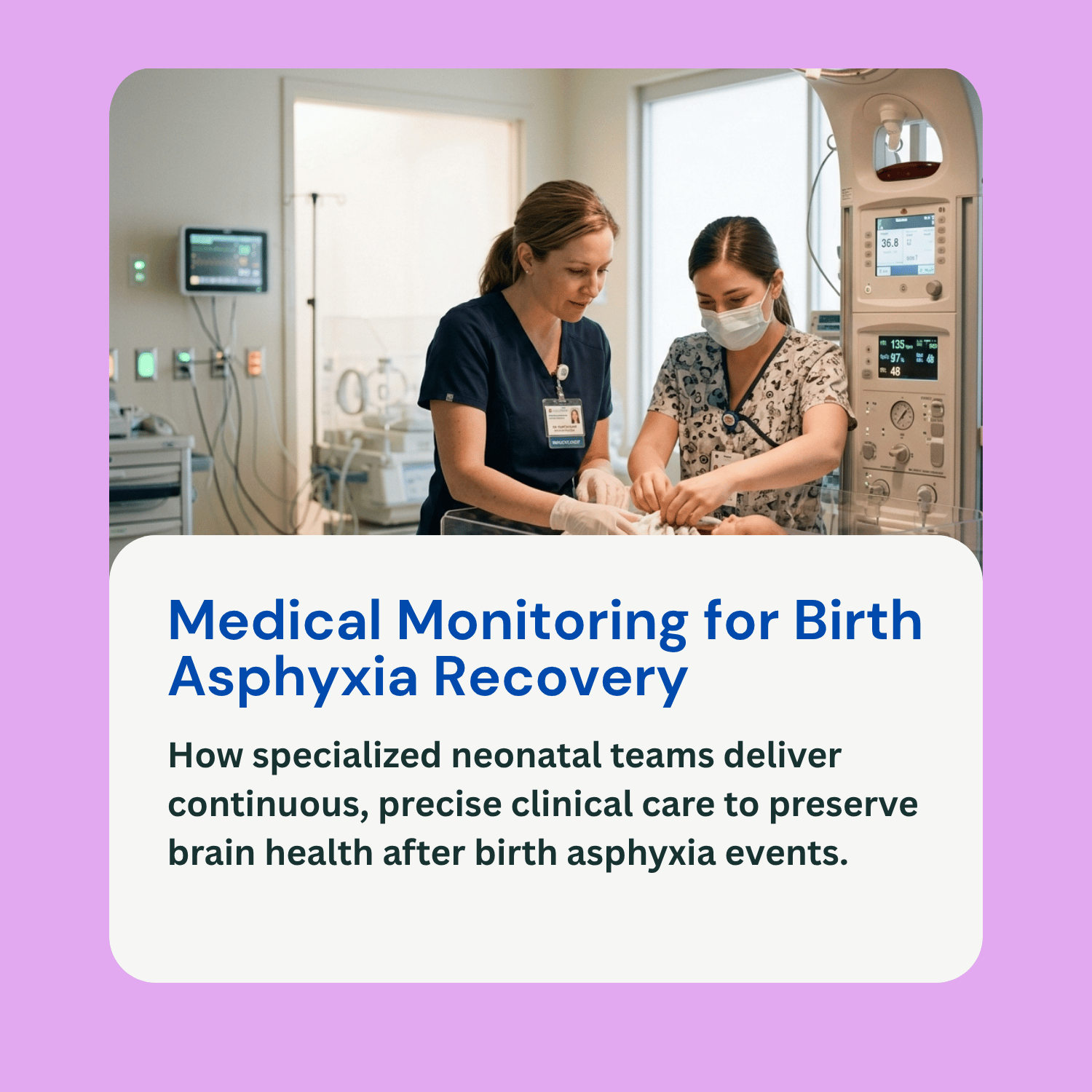
Therapeutic hypothermia takes 72 hours of continuous cooling, followed by a slow, carefully monitored rewarming process over 6 to 12 hours. During this entire period, the infant is closely monitored in the NICU by pediatric specialists to ensure vital signs remain completely stable.